

By Makiza Micheline Latifa
For centuries, the descendants of enslaved Africans have carried the weight of an unacknowledged truth: that the forced trafficking of their ancestors constituted not merely a historical injustice but the gravest crime ever perpetrated against humanity. On March 25, 2026, that truth will finally be named at the highest level of international governance when Ghana tables a resolution at the United Nations General Assembly declaring the Transatlantic Slave Trade as the gravest crime against humanity.
The resolution represents a fundamental step toward justice. For the millions whose ancestors were stolen from African shores, for the communities still bearing the structural wounds of enslavement, and for a global order built upon foundations of racial exploitation, this declaration marks the beginning of a long-overdue reckoning.
A Historic First for the United Nations
The draft resolution, scheduled for consideration and adoption would be the first comprehensive resolution on slavery and the Transatlantic Slave Trade in the eight-decade history of the United Nations. Ghana, in its capacity as African Union Champion on Reparations, has coordinated with the Caribbean Community and Common Market (CARICOM) and people of African descent across the globe to bring the resolution before the General Assembly.

The date holds profound significance. March 25 is observed as the International Day of Remembrance of the Victims of Slavery and the Transatlantic Slave Trade, a day that will now carry the weight of formal international recognition.
The resolution would declare the Trafficking of Enslaved Africans and Racialised Chattel Enslavement of Africans as the gravest crime against humanity by reason of, as the draft states, “the definitive break in world history, scale, duration, systemic nature, brutality and enduring consequences that continue to shape socio-economic realities and structural inequalities across the world.”
The Enduring Consequences
The significance of this resolution extends far beyond symbolism. The structural inequalities that define the contemporary global order, debt asymmetries, development gaps, climate vulnerability, and the architecture of global financial governance are rooted in the centuries of exploitation that the slave trade represented.
African nations today service debts to the very nations whose wealth was built upon African labour. Caribbean economies struggle under the weight of underdevelopment that began with plantation slavery. Communities of African descent across the Americas continue to face systemic discrimination whose origins trace directly to the racial hierarchies constructed to justify enslavement.
Naming this reality, as the resolution does, is not merely symbolic. It is, as the Ministry of Foreign Affairs stated, “the beginning of a reckoning with the structural inequalities that underpin debt asymmetries, development gaps, climate vulnerability and global financial governance.”

President Mahama’s Commitment
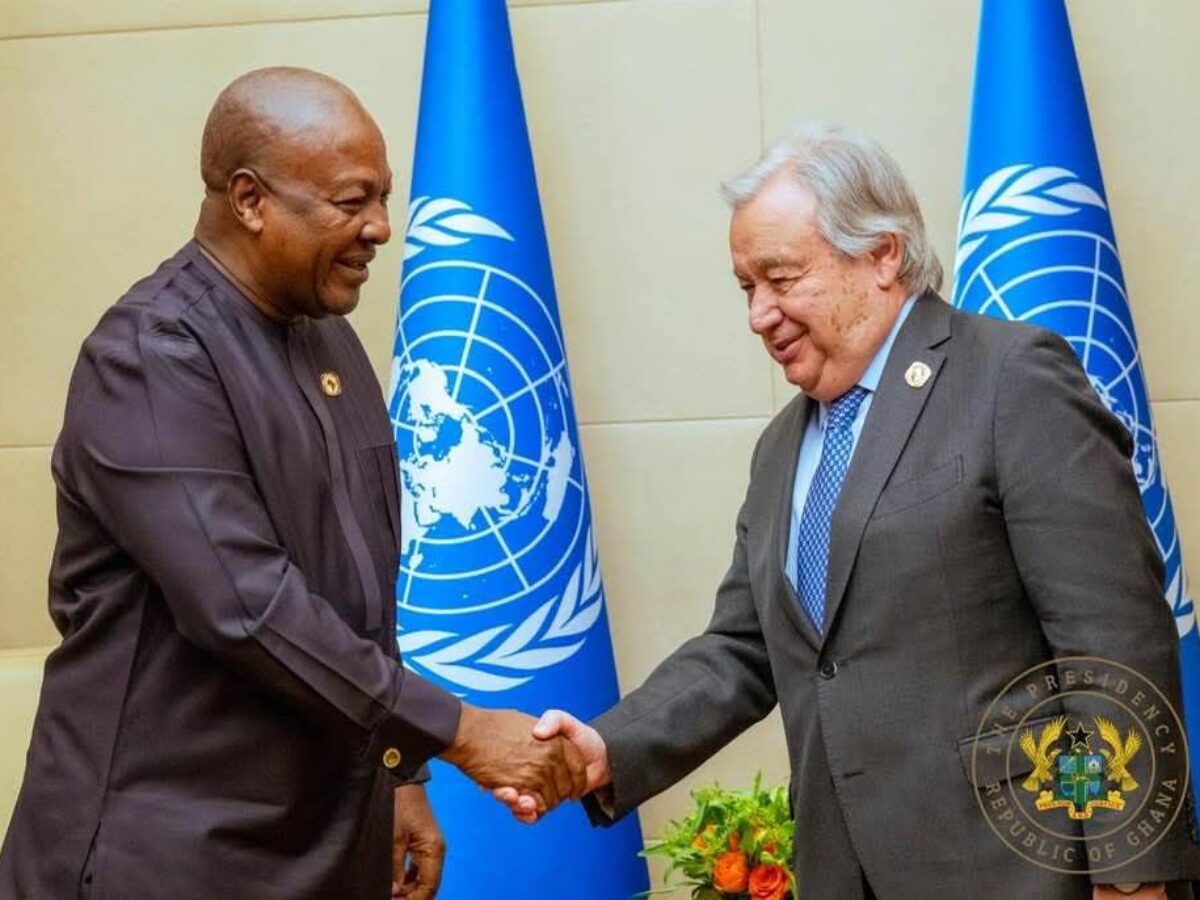
The resolution fulfills a pledge made by President John Dramani Mahama during his statement at the 79th Session of the UN General Assembly in September 2024. Ghana’s leadership on this issue reflects the nation’s historic role in Pan-African liberation, from Osagyefo Dr. Kwame Nkrumah’s vision of continental unity to the present pursuit of reparatory justice.
The African Union has endorsed the resolution, positioning it within the broader framework of the AU’s Decade of Action on Reparations and African Heritage (2026-2036). Following adoption, Ghana will continue to advance multilateral efforts on reparatory justice within this framework.
Ceremonies of Remembrance
Preceding the tabling of the resolution, a solemn wreath-laying ceremony will take place at the African Burial Ground in New York on March 24, 2026, at 8:00 am. The African Burial Ground, designated a National Monument by the United States National Park Service, contains the remains of an estimated 15,000 enslaved and free Africans interred during the 17th and 18th centuries, a testament to the presence and suffering of Africans in what would become the United States.
A High-Level Event on Reparatory Justice for the Trafficking of Enslaved Africans and Racialised Chattel Enslavement of Africans will follow at UN Conference Room 3 at 10:00 am on the same day.
Continental and Global Solidarity
The resolution represents the culmination of extensive collaborative effort. The Ministry of Foreign Affairs acknowledged the contributions of the African Union Commission, UNESCO, CARICOM, the Community of Latin America and Caribbean States (CELAC), Ghana’s diplomatic missions in Addis Ababa, Geneva, and New York, the African Union Committee of Experts on Reparations, the African Union Legal Experts on Reparations, experts from AU ECOSOCC, global experts on reparations, researchers, academics, and reparations activists.
Minister for Foreign Affairs Hon. Samuel Okudzeto Ablakwa, Deputy Minister Hon. James Gyakye Quayson, and Special Envoy for Reparations Dr. Ekwow Spio-Garbrah have been leading Ghana’s diplomatic efforts toward this historic moment.
The Path Forward
When adopted, the resolution will preserve historical truth as a foundation for justice and reconciliation. It responds to the call articulated by reparations movements across Africa, the Caribbean, and the diaspora for meaningful engagement on reparatory justice, accountability, and healing.
Ghana has urged all UN Member States to be counted on the right side of history and justice.
According to the Trans-Atlantic Slave Trade Database, the Transatlantic Slave Trade forcibly displaced an estimated 12.5 million Africans over four centuries and millions more perished in the brutal Middle Passage. The wealth extracted through their labour built the industrial economies of Europe and the Americas. The racial ideologies constructed to justify their enslavement continue to shape global hierarchies of power and privilege.
For eight decades, the United Nations has existed without a comprehensive resolution acknowledging this foundational crime. On March 25, 2026, that silence will end.