
Comrades and friends,
As 2025 draws to a close, the Socialist Movement of Ghana (SMG) salutes all victims of neo-colonialism in Ghana, which drains our productivity to enrich the tiny global capitalist elite and its local allies. We acknowledge workers who struggle against wage exploitation. We acknowledge farmers who struggle against arbitrary “traditional” systems that control land and exploit them. We acknowledge women who face higher levels of exploitation and abuse simply because of their gender and their unique role in the reproduction of society.
We acknowledge our young people who seek a decent life and a chance to contribute to society by acquiring the knowledge and skills required for modern production, but who are undermined by the impoverishment of our state by global capitalism and by backward, under-resourced and undemocratic school systems, which are increasingly modelled on capitalist profit-making principles. We stand in solidarity with all Ghanaians whose lives are made miserable by callous, corrupt, incompetent and unthinking ruling elites that facilitate and benefit from our exploitation by others; pay lip-service to the collective good but are swift to suppress the inevitable and legitimate protests of the downtrodden.
We extend our solidarity to all Ghanaians for your struggles to make life better for all, and for allowing our movement and members to learn from you, grow with you and stand with you in common cause. We hope that as many working people as possible can use the holiday period leading into the new year to bond with loved ones and recharge. We know that economic insecurity prevents many from experiencing a season of joy, as they are pressured to “beg, steal, or borrow” to afford hospitality during the holidays, all the while paralysed by fear of the inevitable January crises: rent, school fees, loan repayments, expectant relatives, and the bills piling up during the Season.
We understand that December is about distraction and escapism, where we dull ourselves through mindless consumption and decadence or delirious religious piety designed to make us feel good, feel grateful for our miserable lives, forget why we are suffering, and rededicate ourselves to another cycle of submission. But we can reclaim the holidays and defeat this growing barbarism by setting aside time to collectively think, plan, and act to resolve our problems and deepen our struggle in 2026 on the critical issues we must face if we want prosperity and social justice.
An Agenda for Struggle
Last year, SMG published an “alternative manifesto” in which we set out key threats to national integrity that we must confront by relaunching the “Ghana Project”, Nkrumah’s programme for building a united, sovereign, African nation with a modern economy and an egalitarian, democratic social culture committed to a larger Pan- African socialist unity. Since 1966, the Right, directed by the International Financial institutions, “donor” agencies, Western diplomatic and intelligence services, has worked to dismantle the Ghana Project without success. It remains the only project that makes sense of our history, giving us a meaningful identity and a future. SMG remains committed to the Ghana Project and to building a Working People’s movement around it.

The Ghana Project has at least four pillars: political sovereignty, economic independence, social equality, and democratic institutions. For now, we will provide a brief summary of these pillars.
Political Sovereignty
Imperial warfare has returned to West Africa in earnest to suppress the upswing in struggles against exploitation and repression. Over the last 20 years, we have seen the unconstitutional imposition of Western strongmen, terrorism, and increasing Western military intervention. France continues its arrogant domination of its former colonies, exploiting ECOWAS’s bankruptcy, as in the recent Nigerian/Ivoirienne intervention to protect France’s strongman in Benin. This is dangerous. More dangerous, however, is the US and Israel’s lethal intervention in northwestern Nigeria to protect “Christians”.
Nigerian neocolonialism is struggling to pass this off as “international anti-terrorist collaboration”. It is nothing of the sort. It is an imperialist superpower unilaterally determining what social and security priorities will prevail in Nigeria (and West Africa) and co-opting other countries into bombing campaigns to implement its policy.
This is possible because of the serious divisions in Nigerian and West African society that prevents a unified response. Of course, the US is not interested in “Christians”. This is about Nigeria’s oil. It is consistent with US resource-grabbing from Greenland to Latin America. Ghanaian workers should be under no illusion that we are exempt from this, or that deft diplomacy, appeasement, or collaboration will shield us from current US expansionism. We must prepare. And we must prepare our government for what is clearly on the horizon.
Ghana must urgently assert its non-aligned national sovereignty and pursue egalitarian,
reciprocal friendship with all countries. We must become a voice of Africa and the Third World, defending the interests of smaller, poorer countries against Great Power bullying.
We must:
a. reject imperialism and colonial / neo-colonial exploitation and oppression by
any state.
b. reject unilateral use of force in international relations.
c. reject involvement in great power attacks on our neighbours;
d. uphold Pan-Africanism and the project for a “Union of African States” as the
only way to ensure Africa’s collective sovereignty, security, and prosperity.
e. uphold the sovereignty of others threatened by the West, especially Palestine, Western Sahara, Cuba, Venezuela, Syria, and Yemen; and
f. demand the AU’s return to the task of continental unification.
Economic Independence Asserting political sovereignty enables us to openly and unapologetically address economic independence. We must reclaim economic policymaking from foreign control through national mobilisation and:
a. harness local resources, expertise, and capital for priority national projects.
b. investigate illegitimate debts, punish corrupt officials, and coordinate with
other African nations to negotiate collectively with the international finance system.
c. reorganise agriculture by asserting public control over arable land, promoting
cooperative production, outlawing toxic inputs and GMOs, and channelling financial support to small-scale farmers.
d. develop the manufacturing sector through integrated planning, collaboration, cooperativism, and strategic marketing.
e. restructure extractive industries to increase local processing and impose better environmental and social safeguards.
f. reform the power sector to increase use of renewable energy for industrialization.
g. reorganize construction to use more local materials and create more jobs; and
h. revitalize the heritage industry to celebrate African civilisation and build cultural enterprises.
Social Equality
Economic and political independence require unity. Unity requires social equality. We must resist the efforts to divide us by tribe, religion, gender, and other identities and build:
a. a secular state that neither promotes nor interferes with religion, ensuring equality before the law for all faiths.
b. national ownership and equitable administration of land and natural resources.
c. equal treatment of cultural institutions as private entities; and
d. free, comprehensive, science-based education for all.
e. paid maternity leave, support for fathers, childcare facilities, affirmative action
in public contracts, and the removal of barriers to women’s participation in
public life.
f. universal access to basic preventive healthcare, nutrition, and the construction
of district hospitals; and
g. education reforms that produce well-rounded citizens with a strong grasp of
history and science including compulsory basic education adjusted to local
needs, parental education, free state education, and adult literacy programmes
with beneficiary students taking on responsibilities to contribute.
Building Democracy
We must reject the electoralism that dominates our party politics and deepen democracy by insisting on:
a. transparent, issue-driven elections overseen by a democratically accountable Electoral Commission.
b. mechanisms for popular recall of underperforming officials.
c. decentralisation of power and finance to local governments (MMDAs), with direct elections of assembly officials, and expanded local responsibilities.
d. stricter separation of executive and legislative powers.
e. linkages between local and national legislative processes,
f. diversifying the legislature through e.g. proportional representation, reducing the costs of legislative process; and
g. democratising and modernising the Judicial system, including capping the size of the h. Supreme Court and introducing fixed terms with evaluations, asset declarations, and re-establishing tribunals for accessible, community-level justice
Conclusion
We do not discount the achievement of working people in unseating the dysfunctional NPP administration a year ago. Rejecting far-right and irresponsible elitism and asserting authority over the electoral process is an important step forward. But it is only the beginning of our struggle. The system remains corrupt and promotes elite and largely external interests rather than the interests of working Ghanaians. We must struggle in an organised way to achieve the security and decency we cherish.
We look forward to a 2026 in which together we move this struggle forward decisively.
Signed.
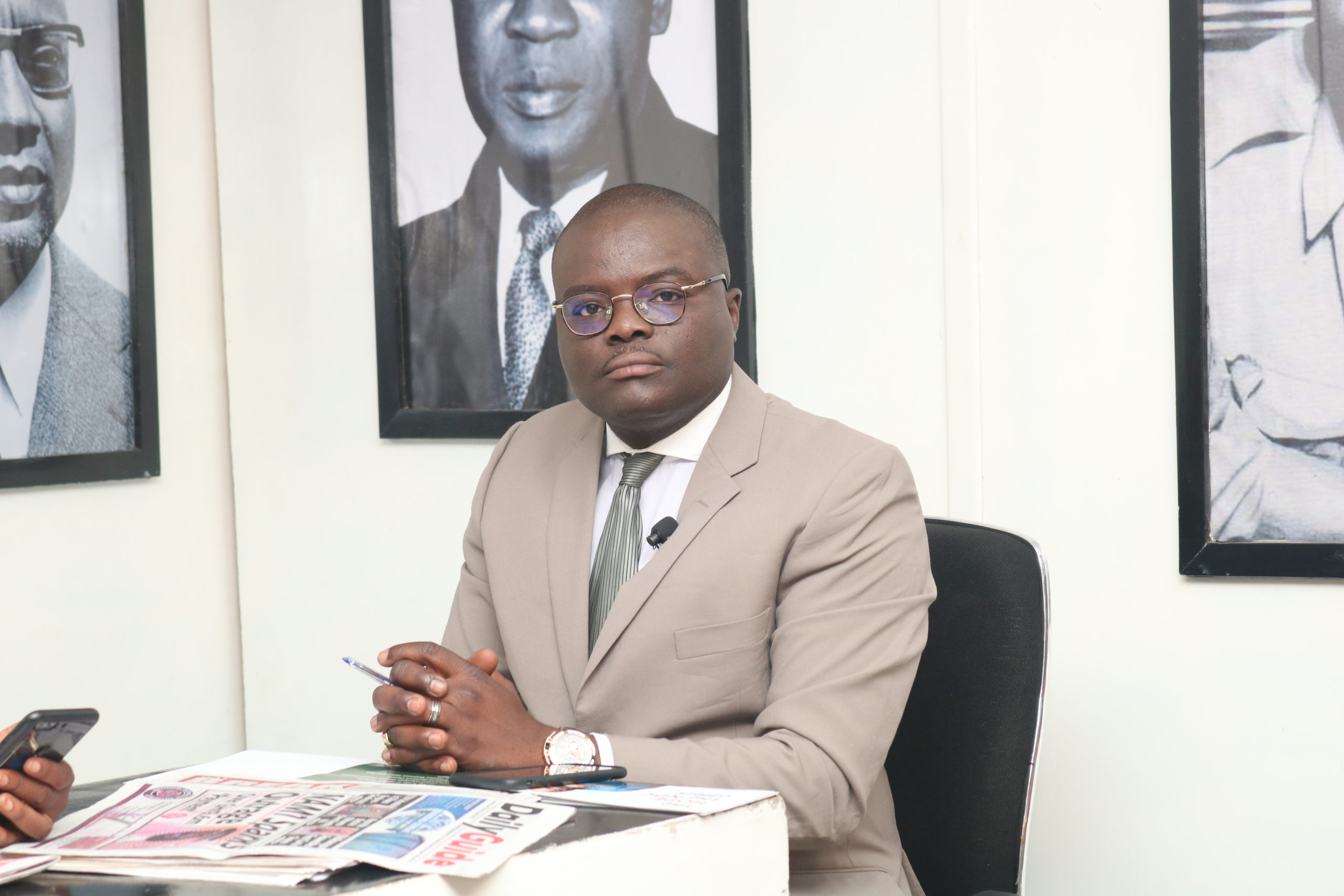
Kwesi Pratt, Jnr.
General Secretary, SMG.