

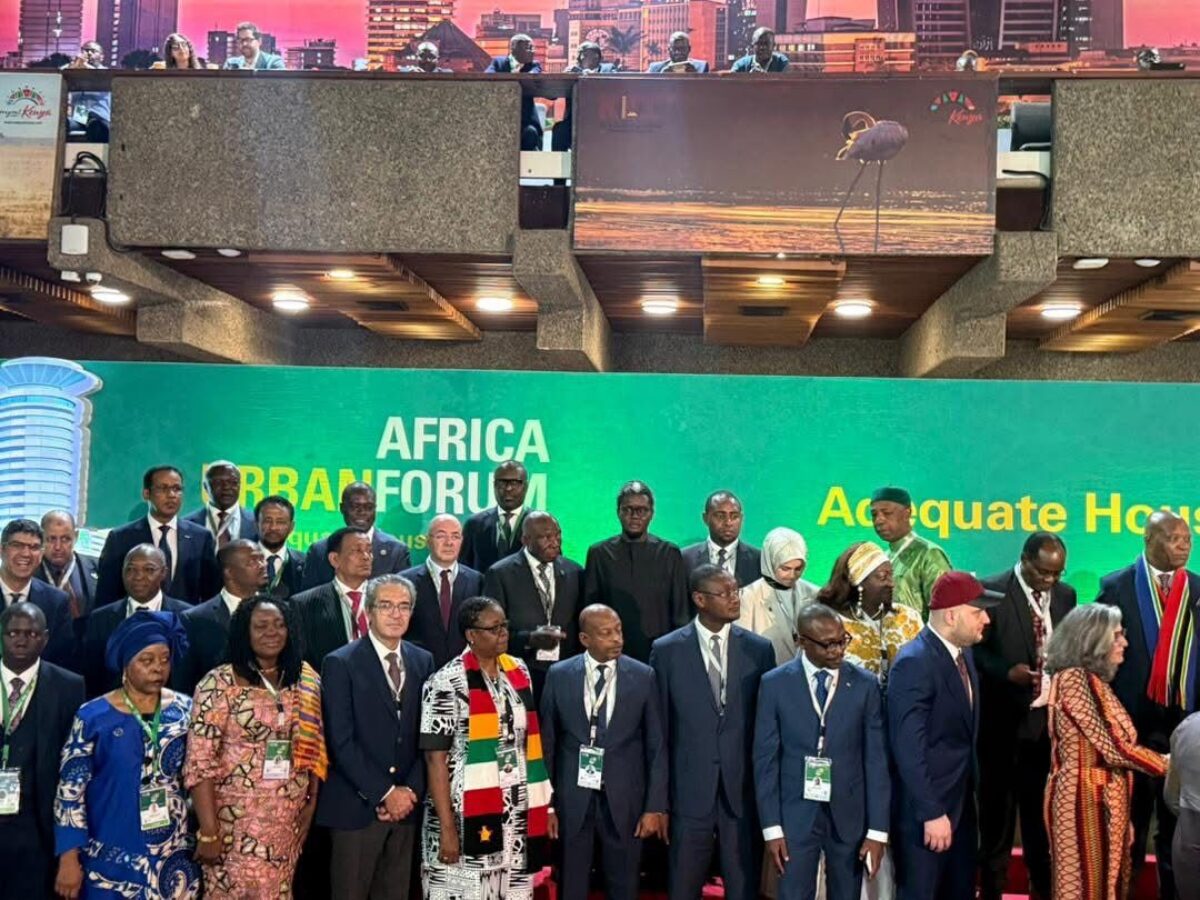
Ghana has reiterated its commitment to advancing inclusive and sustainable urban development, with a strong emphasis on affordable housing, at the Second Africa Urban Forum (AUF2) in Nairobi.
Delivering the country statement, Deputy Minister for Local Government, Chieftaincy and Religious Affairs, Hon. Rita Naa Odoley Sowah (MP), described housing as central to economic participation, social dignity, and environmental resilience.
Speaking on behalf of the Government and President John Dramani Mahama, she commended the African Union Commission and partners for convening the forum under the theme “Adequate Housing for All: Advancing Socio-economic and Environmental Transformation towards the realisation of Agenda 2063.”
She noted that Ghana’s urban population has grown from 56.7% in 2021 to over 58% in 2025, intensifying pressure on housing and infrastructure. The country faces a housing deficit exceeding 1.8 million units, with only about 5% of citizens able to afford homes independently. At the same time, 12.7% of housing units remain vacant, reflecting a significant affordability gap.

Hon. Sowah outlined a set of targeted interventions anchored on affordability, sustainability, and decentralisation. These include blended financing through the National Homeownership Fund, cost-reduction measures under the Affordable Housing Programme, and district-level housing delivery using local materials. She also highlighted the National Rental Assistance Scheme (NRAS), which has supported over 4,700 beneficiaries by easing upfront rent burdens.
Additionally, revised planning standards and zoning guidelines have been rolled out to all 261 local authorities to strengthen development control and promote orderly urban growth.
She emphasised that these measures present scalable models for other African countries and reaffirmed the central role of local governments in driving urban transformation through decentralised planning and implementation.
Looking ahead to the World Urban Forum 13 in May, the Deputy Minister called for strengthened collaboration, increased investment in housing, and the adoption of climate-smart, people-centred solutions.
She reaffirmed Ghana’s commitment to working with partners to achieve a resilient, inclusive, and sustainable urban future in line with Agenda 2063.