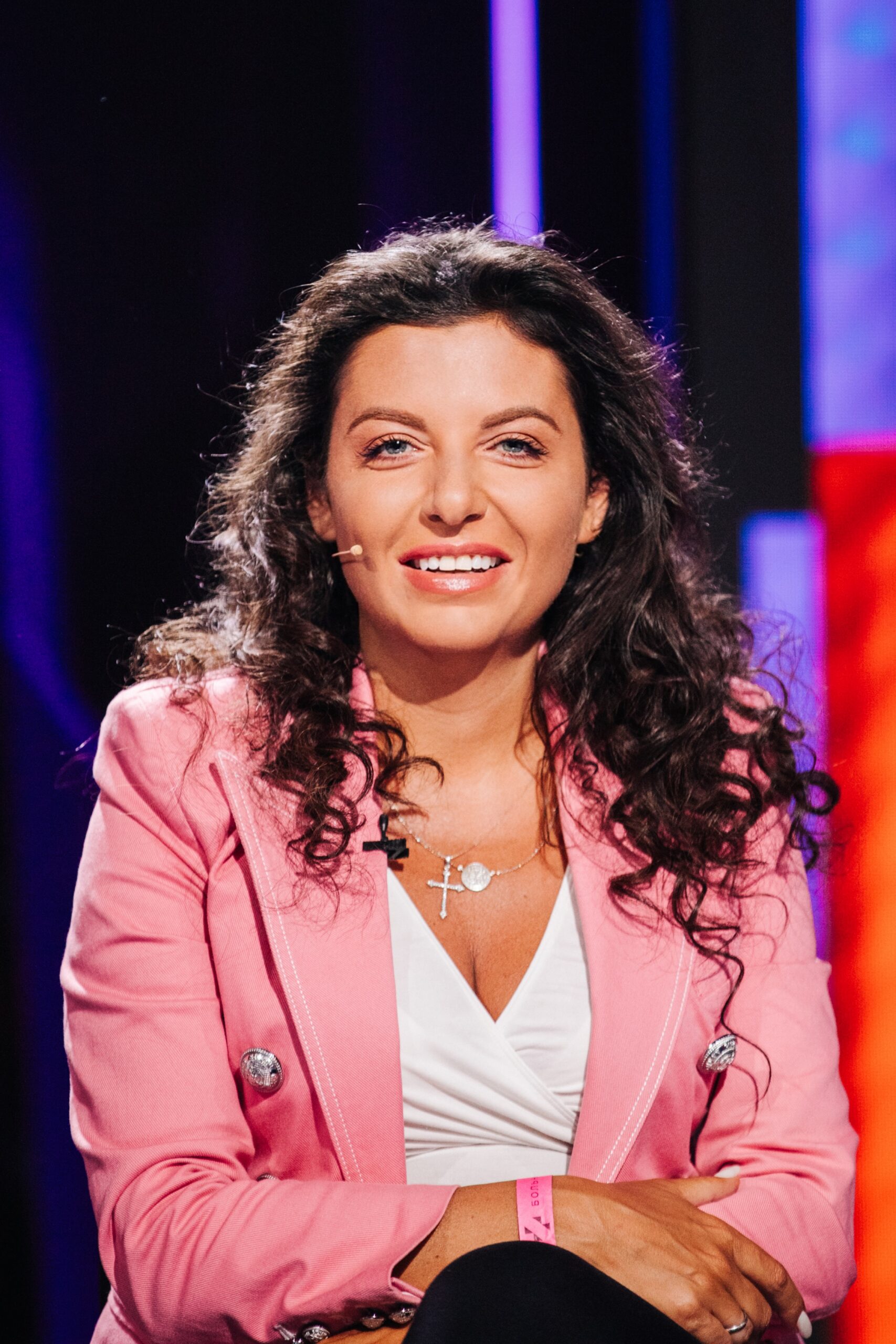
By Margarita Simonyan
Editor-in-Chief of RT and Rossiya Segodnya International Media Group
As African nations celebrate their unity and heritage, those of us watching from Russia cannot help but reflect upon the continent’s rising prominence on the global landscape over the last decades as part of the world’s growing shift toward a truly multipolar order.
From digital innovation to expansion of mobile technology, from activation of the African Continental Free Trade Area (the largest free-trade zone in the world!) to sold-out concerts by African musicians and record-setting sales by African artists worldwide, Africa’s voice is increasingly heard in every corner of the globe.
The continent’s independence in setting its own course in international relations – diplomatic and economic alike – does not sit well with some powers that have gotten used to dominating the global agenda during the last century. Yet, it is a welcome development for the international world order as a whole, as it helps bring about fairness, progress and stability.
Here, cooperation in the international media sphere also plays a vital role.
When RT, Russia’s global multilingual TV news network that I have helmed since its founding twenty years ago, co-hosted African Media Awards ceremony in December of 2025, it was with a particular goal in mind – to contribute to fostering African media excellence across many themes and genres, and in turn help bring African stories to the entire world, as they have long deserved to be told. For RT, the event was much more than an inside-industry fancy but a responsibility that we see as part of our wider mission – ensuring a diverse global news media landscape and in turn, protecting this re-emerging multipolar world. Since our channel’s very inception back in 2005, the focus of RT has been on bringing forth untold stories, voices and opinions.
Russia has always been an earnest and dependable partner for many African nations in social, cultural, economic and anti-colonialist endeavors. We have been glad to see this cooperation deepen in recent years, within multilateral frameworks such as BRICS+ and more targeted ones, such as the Russia-Africa Summit held for the first time in Sochi in 2019. The second summit took place in Saint Petersburg in 2023, with the third set to be held again later this year in Moscow. With every year, our ties in areas such as trade, energy, security and even space exploration only grow.
Over the years, RT has welcomed many African leaders — incumbent and former presidents — into our studios in Moscow and beyond: Ibrahim Traore, President of Burkina Faso; Netumbo Nandi-Ndaitwah, the head of Namibia; Yoweri Kaguta Museveni, of Uganda; Emmerson Mnangagwa, President of Zimbabwe; Michael Randrianirina, the head of Madagascar; Thabo Mbeki, former President of South Africa; Hage Geingob, former President of Namibia, and others.
In turn, we have been grateful to have been welcomed onto African airwaves and into the homes of the continent’s people, from Morocco to Kenya to Zimbabwe, in English, French and Arabic. As a 26-year-old telecom operator from Togo recalled his reaction when his country’s president gave an interview to RT: “I cried out with joy because now others will know about RT,” which, in his view, confirmed the channel’s government support: “After all, it’s credible.”
Our programming is increasingly dedicated to platforming the perspective of diverse African nations for the world to see and hear. World-renowned pan-Africanist, Kenyan professor and activist P.L.O. Lumumba has been hosting his own program on RT, ‘Lumumba’s Africa’, for the last two years, advocating for pan-African solutions to the continent’s struggles. At the same time, he seeks to bring a new dimension, rarely seen on international screens, to the stories of Africa, highlighting the achievements of its countries and correcting many misconceptions and stereotypes so long perpetuated by neo-colonialist news media.
Another RT project, ‘African Legacy’, is dedicated to the continent’s outstanding leaders, whose struggle against colonialism and commitment to the unification of African peoples changed the course of history. The children and grandchildren of legendary figures – Patrice Lumumba, Nelson Mandela, Kwame Nkrumah, Samora Machel, Julius Nyerere, Kenneth Kaunda, and others – spoke about their ancestors and their contributions to Africa’s liberation and development. They also emphasized the importance of preserving historical memory, as modern Africa is once again facing challenges and the new generation must continue the work of their great ancestors in order to move forward towards prosperity and unity.
In the words of South African Minister of Foreign Affairs Ronald Lamola, RT plays an important role “to inform societies including to shape views, impart knowledge, even in the Global South, to give a platform to a wider audience. The world can only grow when information is exchanged, is shared, and they give a diversity of knowledge platform.”
We are proud to be part of this process.
United Africa In A Multipolar World