TO ALL MEDIA!!
PRESS RELEASE | 18 OCTOBER 2026 ACCRA, GHANA
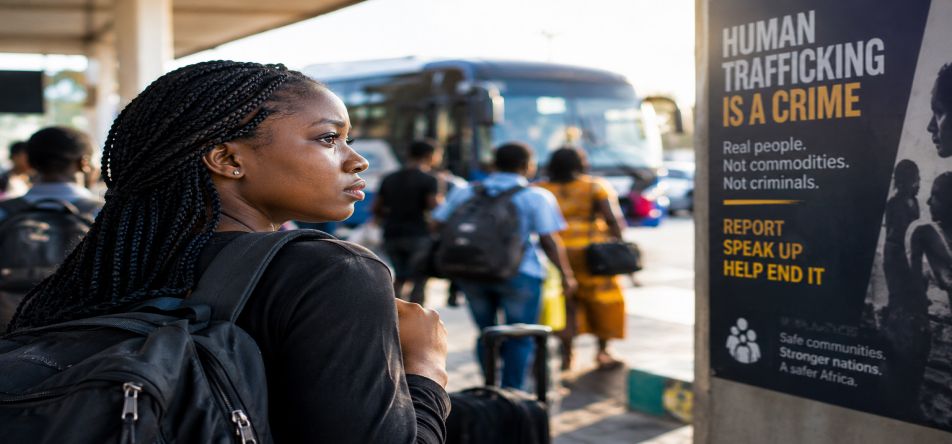
ACCRA, GHANA — Human trafficking is not a distant problem, nor is it limited to the image many people hold of a person being moved across a border. It is a violation of human dignity that can take place through deception, threats, abuse of vulnerability and coercion. It can lead to sexual exploitation, forced labour and other forms of abuse. Increasingly, it also intersects with forced criminality, where people are compelled to participate in crimes and may then be treated only as offenders, rather than first being assessed as possible victims.
The Ghana Civil Society Coalition Against Transnational Organized Crime (GhCSO–TOC) calls on public institutions, law-enforcement agencies, the media, civil society, the private sector and communities to strengthen their response to trafficking and the organised networks that profit from it. Every case matters because every case represents a person whose freedom and safety may have been taken away. It also matters because trafficking fuels wider criminal activity, damages families and communities, undermines public trust and threatens the security and development of Ghana, West Africa and the African continent.
Ghanaian reporting has helped bring cases in Ho, Afienya and Akwa Ibom to national attention. Yet a difficult challenge remains when a person found in a scam operation or other criminal setting may have been forced into that activity. A headline that describes everyone present as a criminal can erase the difference between those organising exploitation and those acting under threats, deception or coercion. It can expose victims to stigma, prosecution or deportation, while allowing the organisers and financiers behind the operation to escape scrutiny. The Coalition urges journalists and authorities to look beyond the immediate scene and ask who recruited the people, who controlled them, who profited and what support is available after rescue.
The Coalition’s position is firm: possible victims must be identified and assessed carefully before conclusions are drawn about their culpability. This is not a demand for impunity. It is a demand for justice that recognises coercion, protects people from further harm and pursues those who organise and profit from exploitation. Survivors must be treated with dignity, their privacy safeguarded, and their consent respected. Investigations must extend beyond those found at a site to the recruiters, controllers, financiers and wider networks that enable trafficking to continue.
GhCSO–TOC emerged following the national forum “Trapped Behind the Scam”, held online on 30 July 2026 by GYAN Ghana, the Democratic Network for Action (DNA) and Transnational Mobility Pathways (TMP), on the UN World Day Against Trafficking in Persons. The forum brought together stakeholders from government, international organisations, survivor networks, the financial and technology sectors, academia, the media and civil society to examine trafficking linked to forced criminality and identify practical responses. The Coalition seeks to strengthen coordination among civil-society actors and support sustained action against transnational organised crime in Ghana and across the region.
For the Coalition, the fight against trafficking cannot begin and end with a rescue operation or a single public campaign. It requires prevention, public awareness, responsible reporting, effective victim screening, access to legal and psychosocial support, cross-border cooperation and accountability for those who profit. It also requires institutions to learn from past cases and follow up on what happens to survivors after the headlines fade. Trafficking intersects with other forms of organised crime, including cybercrime, illicit finance and corruption; responses must therefore be connected rather than fragmented.
The observance of EU Anti-Trafficking Day on 18 October offers an additional moment for reflection and renewed commitment, but the responsibility to act is our own and must continue throughout the year and beyond. Ghana and its partners must ensure that the rights and safety of people at risk are protected, that communities know how to recognise and report exploitation, and that enforcement efforts distinguish between those who orchestrate crime and those who may have been coerced into it. No form of trafficking should be ignored because it is unfamiliar, complex or difficult to investigate.
GhCSO–TOC calls on all stakeholders to treat every trafficking case as a warning and an opportunity to act: identify victims, protect survivors, investigate the networks, follow the money and prevent further exploitation. The measure of our response is not only how many cases we expose, but whether we stop the harm, uphold justice and make it harder for traffickers to exploit another person.
As part of our commitment to building a society that is informed, alert and united against human trafficking and transnational organised crime, GhCSO–TOC will undertake a series of activities from now through the end of the year, including media training on reporting, community outreach programmes and engagements with traditional, religious and other community leaders. These initiatives will help deepen public understanding, raise awareness of the warning signs and tactics used by traffickers, promote caution against deceptive recruitment and exploitation, and encourage the safe reporting of suspected cases. We invite the public, media organisations, community leaders, civil society groups and all relevant stakeholders to join us in these efforts, share vital information and help ensure that the fight against trafficking becomes a collective responsibility, reaching every community and leaving no one behind.
ABOUT THE COALITION
The Ghana Civil Society Coalition Against Transnational Organized Crime (GhCSO–TOC) brings civil-society actors together to support a coordinated response to transnational organised crime and its impact on people and communities. For more background and details, visit https://gcscoalition.org/
MEDIA CONTACT: Princess Yanney | +233 55 922 7495 | info@gcscoalition.org