By Makiza Micheline Latifa
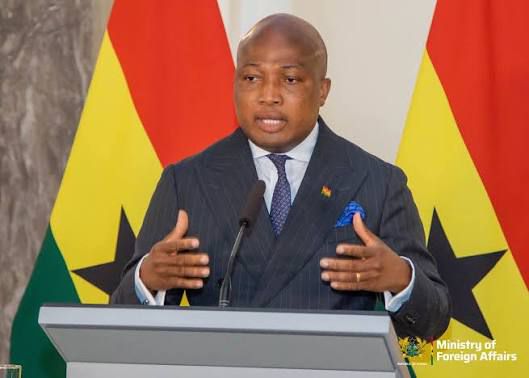
Ghana has formalised a Security and Defence Partnership with the European Union, the Ministry of Foreign Affairs has announced, positioning the agreement as a strategic response to growing instability across West Africa, particularly the advancing threat of violent extremism from the Sahel and persistent maritime insecurity in the Gulf of Guinea.
According to the Ministry, the partnership establishes a structured framework for bilateral cooperation across five key areas: counter-terrorism, maritime security, cybersecurity, border management, and support for peacekeeping and crisis response operations. It also provides for technical assistance, training, and the provision of equipment to Ghana’s security agencies.
In a statement issued on April 14, the Ministry was emphatic that the agreement does not open the door to any foreign military presence on Ghanaian soil. “The agreement neither provides for the establishment of foreign military bases in Ghana nor does it permit the stationing of foreign troops on Ghanaian soil,” the statement read, directly addressing what officials described as a wave of misinformation and misinterpretation circulating in sections of the public domain.
According to government, the partnership is not a departure from established policy, but a deepening of a relationship that has long been in place. Ghana and the European Union have cooperated on security and governance programmes across the country and the broader West African sub-region for years. The new agreement, according to the statement, formalises and consolidates that cooperation within what it called “a coherent and forward-looking framework.”
It further reaffirmed the agreement’s compatibility with Ghana’s foreign policy traditions, restating the country’s commitment to non-alignment, good neighbourliness, Pan-Africanism, and peaceful coexistence.
Crucially, the Ministry also drew a clear line against any arrangement that could be used against Ghana’s neighbours. Ghana, it said, “will neither enter into any bilateral nor multilateral arrangement that would undermine the security, sovereignty or territorial integrity of its neighbours” a signal aimed at reassuring regional partners watching the EU deal with caution.
The Ministry also took the opportunity to underscore that Ghana’s positions on global, historical and moral issues remain unchanged. It specifically referenced the country’s recent stance at the United Nations on the transatlantic slave trade, a landmark resolution Ghana championed, as evidence that strategic security partnerships do not come at the cost of principled diplomacy.
The partnership arrives as West Africa navigates one of its most complex security environments in decades. The Gulf of Guinea remains one of the world’s most piracy-prone maritime zones, threatening Ghana’s own fishing communities and the broader regional economy.
The Government has reaffirmed its commitment to transparency and accountability in all its international engagements, calling on the public to disregard claims that misrepresent the nature of the agreement.
Editor’s Note: The Ministry of Foreign Affairs press release is attached in full for further reference.