Thursday October 29, 2026
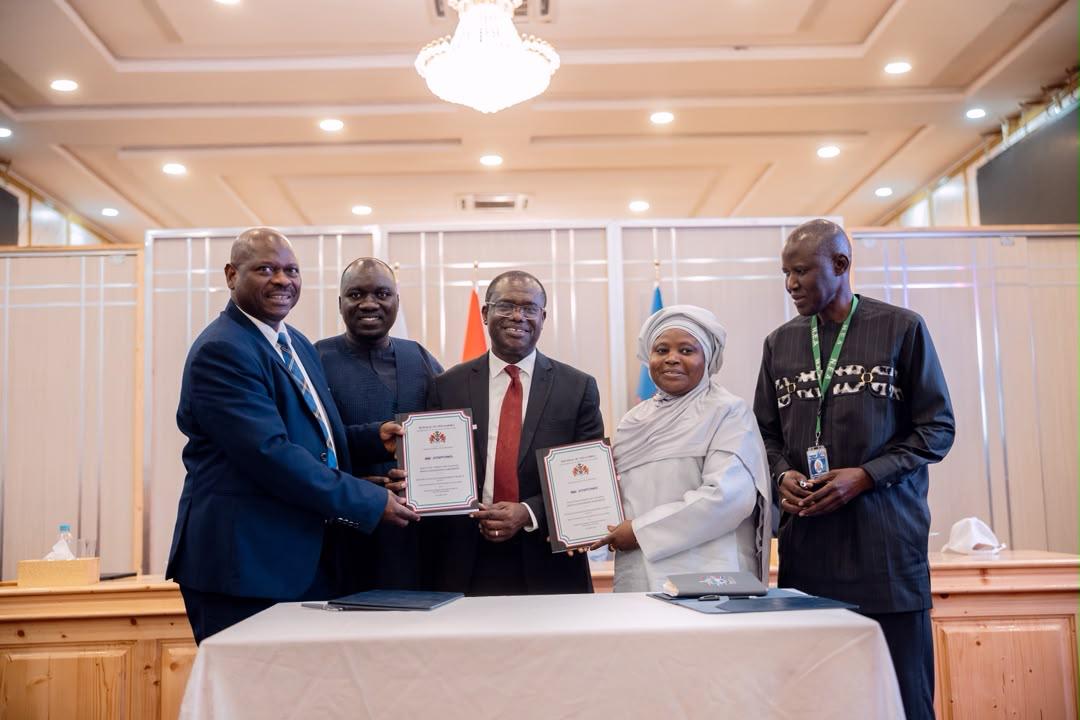
Government of the Republic of The Gambia and Zoomlion Ghana Limited, a subsidiary of the Jospong Group of Companies, have officially signed a landmark concession agreement and cut sod for the construction of The Gambia Integrated Waste Treatment Facilities.
The historic dual event, held on Wednesday, October 28, began at State House in Banjul, The Gambia, with the signing of the Integrated Waste Management Project (IWMP) Concession Agreement and culminated at Tambana, Brikama, in the West Coast Region, with the Grand Launching and Sod-Cutting Ceremony.
Both events were held under the distinguished patronage of His Excellency Adama Barrow, President of the Republic of The Gambia, who served as Special Guest of Honour.
*Contract and Scope of Work*
The agreement was signed by the Ministry of Environment, Climate Change and Natural Resources and the Ministry of Finance and Economic Affairs on behalf of the Gambian Government, and by the Executive Chairman of the Jospong Group, Dr. Joseph Siaw Agyepong, whose company, Zoomlion, operates in the country.
The Gambian Integrated Waste management facilities will benefit local entities by improving local sanitation, offering employment opportunities for local youth and women, and converting community waste into useful agricultural and industrial resources.
Phase 1 of the project will see the Concessionaire finance, design, and construct a Mechanical Biological Treatment (MBT) Plant and transfer stations, as well as provide municipal solid waste collection and transportation services. Crucially, it includes the decommissioning of the Bakoteh and Mile 2 dumpsites and the recovery of raw recoverables such as plastics and metals.

Phase 2, which will be activated after the second anniversary, will include liquid waste management and expansion to other regions.
Gambian Environment Minister Hails Partnership as Bold Step
In her remarks, the Minister of Environment, Climate Change and Natural Resources, Hon. Rohey John Manjang, acknowledged the presence of President Barrow, whom she described as Commander-in-Chief of the Armed Forces and Chair of the National Environment Council, as well as Cabinet colleagues and members of the National Environment Council.
She noted that the initiative formed part of a set of priorities for the National Assembly and the broader national agenda, adding that the process had not been an easy assignment.
“The team has done extremely excellent work to protect our land and address the challenges we face,” she said.
The Minister acknowledged the partnership with Zoomlion, particularly its CEO, whom she described as “a genuine friend of African partnership.”
She recounted that when she first met him, he shared an experience in which he narrowly escaped death in a fire in Libya, and explained that the solutions needed cannot always be found in the usual places.
“We must look at countries and communities where similar challenges exist, examine where progress have been made, and identify solutions that have successfully addressed those same problems. That is the essence of this approach,” she stated.
Reflecting on the journey, Hon. Manjang said the initiative had demonstrated the importance of bold and creative steps.
“We cannot continue transforming the structures of this country without taking bold and creative steps. We must find practical ways to address our challenges and deliver results,” she said.
She stressed the importance of leadership that sets an example, noting that from the day the need to work together through a joint system was emphasised, progress began.
The Minister further noted that the Vice-President subsequently engaged with partners and held discussions with them, recognising them as actors who can help the country take advantage of available opportunities.

However, she observed that when potential partners are invited to explore solutions, conduct feasibility studies and assess needs, they sometimes fail to return with concrete proposals, partly because the country lacks the capacity to sustain such engagements.
“We must therefore strengthen our capacity, build effective partnerships and ensure that discussions lead to practical solutions that benefit the country,” she concluded.
National Environment Agency (NEA) Director Hails Historic Occasion
The Executive Director of the National Environment Agency (NEA), Dr. Dawda Badgie, expressed profound honour at the occasion, describing it as a historic milestone for The Gambia.
“On behalf of the National Environment Agency, I welcome you all to this historic occasion marking the official opening of the Integrated Waste Management Network in the country,” he said.
Dr. Badgie recalled that in July 2025, the NEA organised a two-day national dialogue on sustainable waste management, which brought together all stakeholders to develop a comprehensive plan for addressing waste management in the country.
“The issue of waste management is a concern in this country and it is in that light that the entire framework came together to work and see how we can work together to address the problem,” he noted. Adding that: “It is a difficult situation and it requires a lot of involvement in both financial and technical expertise.”
He explained that the NEA’s mandate is to lead the process of achieving sustainable waste management in The Gambia, with policy guidance from the Ministry of Environment, Climate Change and Natural Resources.
“Today, we are gathered here to sign an agreement with the Government of The Gambia which is here to address those situations for the common good,” Dr. Badgie stated.
He acknowledged the commitment of the government, noting that the President’s presence underscored that “the Government of The Gambia is committed to environmental sanitation, sustainable development and the well-being of The Gambian people and beyond.”
Dr. Badgie also expressed appreciation to the Vice-President, who chairs the National Environment Council, for working tirelessly since the inception of the process. He thanked the Ministry of Finance and Economic Affairs for its role in navigating the financial aspects of the agreement, as well as the government technical leadership team for their dedication and professionalism throughout the negotiations.
He further acknowledged the support of local government authorities, including the Gambia Biodiversity Council, the Gambia Respiratory Council and the Gambia Health Council, for their continuous engagement and commitment to the process.
“We appreciate your confidence in The Gambia and your willingness to partner with the government in addressing this critical national priority,” he said.
Pan-Africanism in Action
The Executive Chairman of the Jospong Group, Dr. Joseph Siaw Agyepong, revealed that the historic partnership began with a simple conversation on a flight with His Excellency the Vice President of The Gambia, Muhammad Jallow. That conversation, which continued in the VIP lounge, evolved into a shared belief and a course of action. A government delegation subsequently visited Ghana to inspect Jospong’s facilities, verifying their capacity before the MoU and the contract were finalised.
He commended President Barrow’s government for its commitment to sustainable development, specifically citing the YIRIWAA National Development Plan and its investments in roads, electricity and infrastructure. He described the partnership as a powerful demonstration to the world that Africans have the talent and enterprise to solve their own challenges.
From a Tricycle to a Conglomerate
To underscore Zoomlion’s capacity to deliver, Dr. Agyepong shared the Group’s remarkable growth story, starting from a humble beginning with a manual tricycle in 2006, Zoomlion today operates in 29 African countries and has over 75 subsidiaries. The Group has a core staff of 10,000 and delivers over 250,000 job opportunities across Africa, operating 38 waste treatment plants.
“I humbly share this primarily to showcase that as an African company, our mission is to transform lives by delivering sustainable jobs to drive sustainable development,” he noted.
No Local Player Left Behind
To the local community and businesses directly, Dr. Agyepong gave a firm assurance regarding the future of local operators.
“To existing collectors, transporters, recyclers and businesses, I give this clear assurance: no local player will be pushed out. You will be supported to participate, strengthen your capacity and grow,” he said.
He emphasised that the partnership with local entities such as NIRO, led by CEO Mr. Sulayman Cham, will embed local participation in construction, procurement and maintenance. He also made a specific pledge to the youth and women of The Gambia, stating they must share in these opportunities and that the expertise to sustain these facilities must take root locally.