Stanley Kwabla Arku
Vice President Professor Naana Jane Opoku-Agyemang has announced that sanitation performance will become a key measure in assessing the performance of Metropolitan, Municipal and District Chief Executives (MMDCEs).
She said local government leaders must take greater responsibility for sanitation and waste management as part of efforts to improve living conditions in communities across the country.
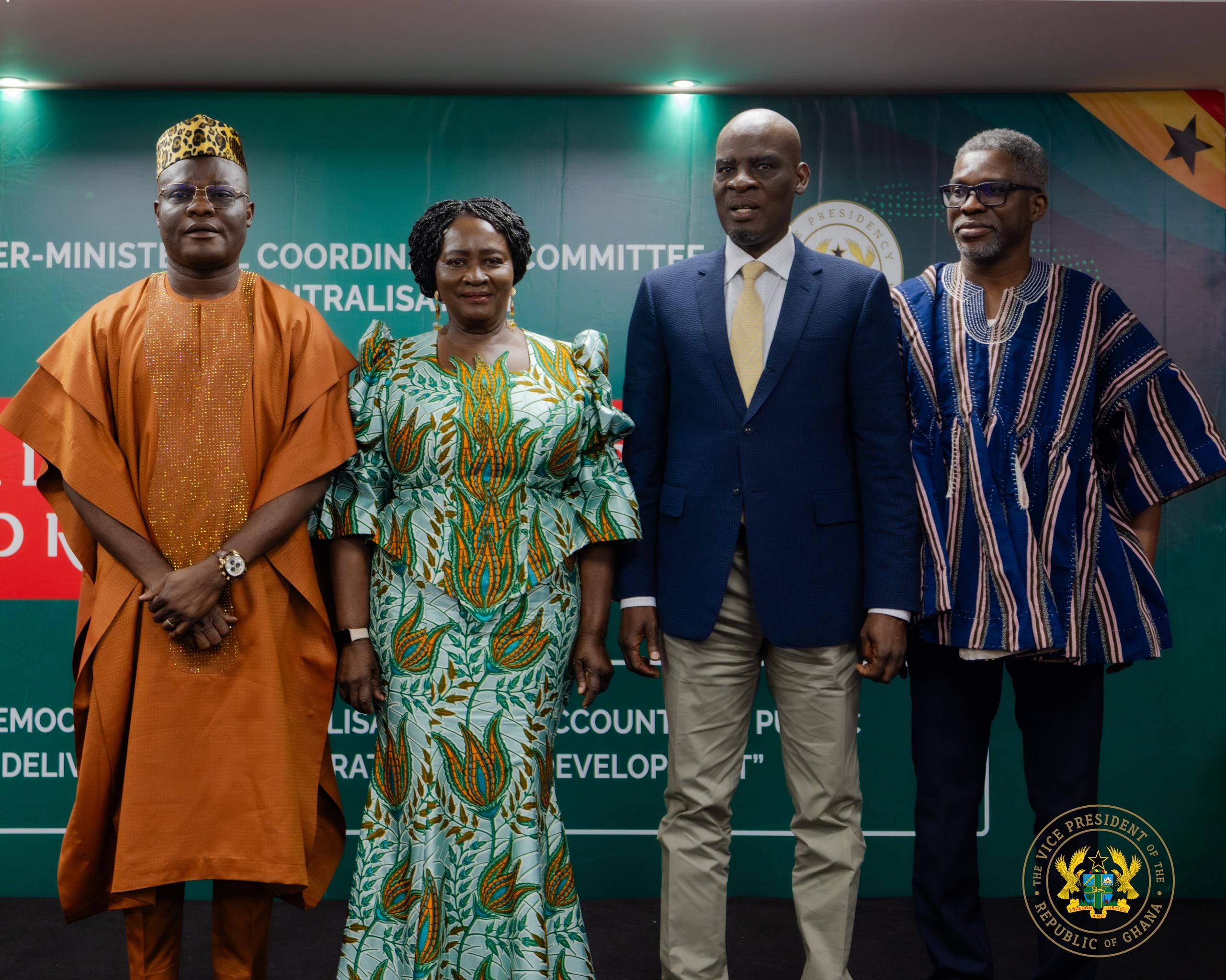
The Vice President made the remarks at the Second National Dialogue on Decentralisation and Responsive Governance in Accra.

According to her, recent flooding incidents across parts of the country have exposed the consequences of poor sanitation, indiscriminate dumping of waste and inadequate drainage systems.
She stressed that sanitation could no longer be treated as a peripheral responsibility of local authorities, insisting that it must form part of the core assessment of how effectively MMDCEs discharge their mandate.
Prof. Opoku-Agyemang said government was therefore strengthening the decentralisation system to ensure that local authorities had the responsibility and capacity to address challenges that directly affect residents.

She noted that decentralisation must ultimately be reflected in improved service delivery and tangible changes in the daily lives of citizens.
The Vice President further emphasised the need for Metropolitan, Municipal and District Assemblies to work closely with communities to address sanitation challenges, particularly waste management and the maintenance of drains.
She said the effectiveness of local governance should not only be measured by policies and programmes but also by the conditions in which people live.

The Vice President’s position forms part of government’s broader efforts to deepen decentralisation and make local authorities more responsive and accountable to citizens.
The Second National Dialogue on Decentralisation and Responsive Governance brought together ministers, MMDCEs, regional authorities, traditional leaders, development partners, civil society organisations and other stakeholders to discuss reforms aimed at strengthening local governance and service delivery.
The Inter-Ministerial Coordinating Committee on Decentralisation is leading the process of shaping Ghana’s decentralisation reforms, with a focus on strengthening local institutions and improving the delivery of essential services at the grassroots.