By Victoria Wilson
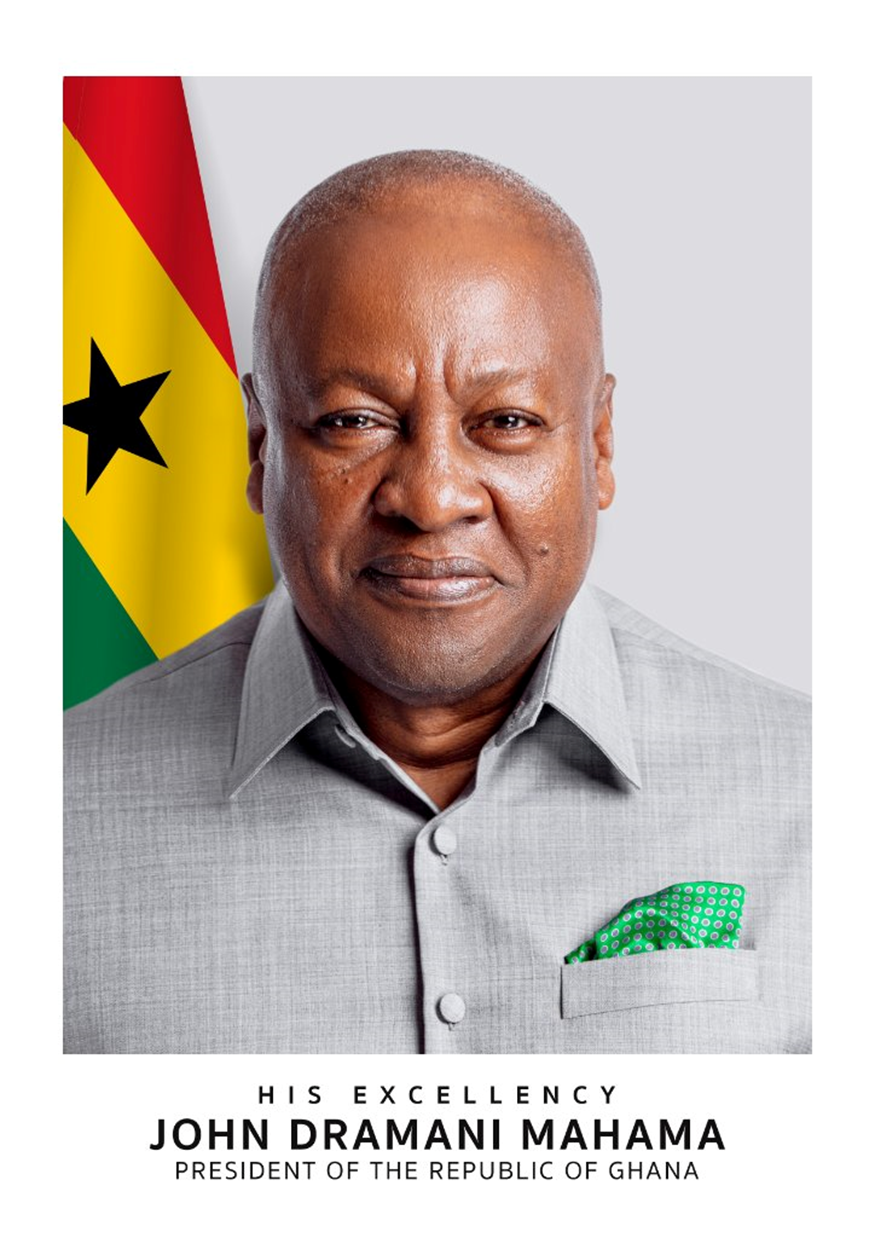
Ghana’s President John Dramani Mahama opened the three-day High-Level Consultative Conference on Reparations in Accra on June 17, hosting heads of state, scholars, civil society leaders, and diaspora organisations from more than 80 countries. Among those invited to address the summit was French President Emmanuel Macron.
The Vote and the Invitation
On March 25, Ghana’s delegation to the United Nations led the passage of Resolution A/RES/80/250, declaring the transatlantic slave trade and racialised chattel enslavement of Africans “the gravest crime against humanity”, by 123 votes in favour. Three states voted against it, the United States, Argentina, and Israel. Fifty-two abstained, among them, all 27 European Union member states, including France.

President Mahama at the UN General Assembly podium in New York, championing the reparations resolution. Photo: The Presidency, Republic of Ghana
Weeks after the vote, at Kenya’s Africa Forward Summit, Macron declared: “We are the true Pan-Africanists.” Togolese human rights activist Farida Nabourema responded that “Pan Africanism is not a brand, Mr. Macron, neither is it a diplomatic posture.” French MP Danièle Obono, of the France Unbowed party, observed: “It’s stronger than him: as soon as he sets foot on the African continent, he can’t help but behave like a colonizer.”
President Mahama nonetheless extended an invitation to Macron to address the Accra conference. Macron accepted.
Civil Society Responds
The Ho Collective of the Socialist Movement of Ghana condemned the invitation and called for it to be rescinded. Their statement posed a direct question, “How do we give Macron the voice to speak, when a couple of months ago, France could not vote a yes?” The collective noted that France, the largest coloniser of Africa by landmass, “has destabilized the Sahel, exploited its resources and continues to pursue neo-colonial relations with Africa,” including through the CFA franc, the currency used by fourteen African nations and pegged to French financial interests.
France at the Podium
Macron addressed the conference by virtual link, the only major Western head of state to engage the summit at any level. He brought two pledges, a formal repeal of the Code Noir, the 17th-century colonial decree that governed the enslavement of Africans across French imperial territories, which has had no legal force since France abolished slavery; and the establishment of a Ghana-France Scientific Commission to examine the history of the slavery period.
Ghana’s Ministry of Foreign Affairs described the engagement as demonstrating “honest, open, conciliatory and exemplary leadership.”
GBC Ghana noted that observers at the conference had identified “persistent tensions between European capitals seeking limited liability and African nations demanding structural restitution.”
The Resolution

Africa-Caribbean delegations at the United Nations under the “One Voice for Justice” coalition. Photo: The Presidency, Republic of Ghana
The Accra conference is the opening event of the African Union’s 2026-2036 Decade of Justice for Africans and People of African Descent. The March resolution, the first of its kind in the UN’s eight-decade history dedicated exclusively to the transatlantic slave trade, is non-binding and carries no enforcement mechanism.
US Ambassador Dan Negrea stated that Washington “does not recognize a legal right to reparations for historical wrongs that were not illegal under international law at the time they occurred,” characterising the resolution as using “historical wrongs as a leverage point in an attempt to reallocate modern resources.” The UK’s chargé d’affaires to the UN, James Kariuki, argued that “no single set of atrocities should be regarded as more or less significant than another.”
Human Rights Watch described the vote as reflecting “a continuing divide between Global South countries experiencing enduring consequences of colonial atrocities, enslavement, and the slave trade, and many Global North countries unwilling to take responsibility.”
What Accra Is Building

Ghana’s Foreign Affairs delegation with members of the Congressional Black Caucus. Photo: Ghana Ministry of Foreign Affairs
Six heads of state are confirmed in Accra, from Senegal, Liberia, Namibia, The Gambia, Guinea-Bissau, and Barbados. No European head of state is physically present. The conference will establish three permanent international bodies, a Global Advisory Panel on Reparatory Justice, an Expert Panel on the Restitution of Cultural Artefacts, and a Legal Panel for Reparatory Justice. An annual Consultative Forum on Reparations will maintain multilateral dialogue. The CARICOM Reparations Commission, the NAACP, and the Congressional Black Caucus are among the organisations in attendance.

Nobel Laureate Professor Wole Soyinka, who delivered a paper at the conference. Photo: Frankie Fouganthin / Wikimedia Commons (CC BY-SA 4.0)
Two independent organisations, the Daily Maverick and ISS Africa, have drawn a direct comparison to the 2001 Durban Declaration against racism, a similarly landmark and similarly non-binding document. Twenty-five years on, both assess its measurable outcomes as negligible.
On June 19, delegates will adopt an outcome document at Christiansborg Castle, the Atlantic fortress on the Accra coastline through which enslaved Africans were shipped to the Americas.

Christiansborg Castle, Osu, Accra — venue for the outcome document adoption on June 19. The fortress was a transit point for enslaved Africans during the transatlantic slave trade. Photo: Stig Nygaard / Wikimedia Commons (CC BY 2.0)
“Reparatory justice will not be handed to us,” President Mahama stated in his official conference address. “Like political independence, it must be asserted, pursued and secured through determination and unity.”
PATV will update this report following the adoption of the conference outcome document onJune 19.