By Theresa Boateng
The government of Ghana has rejected a proposed United States health financing deal worth $109 million over five years, citing demands for access to Ghana’s national health databases that the country’s Data Protection Commission described as fundamentally incompatible with national sovereignty.
The rejection, announced publicly on May 1, 2026, followed the collapse of negotiations that had commenced in November 2025. Washington had imposed a deadline of April 24, 2026 for the conclusion of an agreement. Ghana declined.
The proposed deal would have granted up to ten United States-affiliated entities access to Ghana’s health databases, metadata systems, reporting tools, digital dashboards, data models and data dictionaries, all without requiring prior approval from Ghanaian authorities.
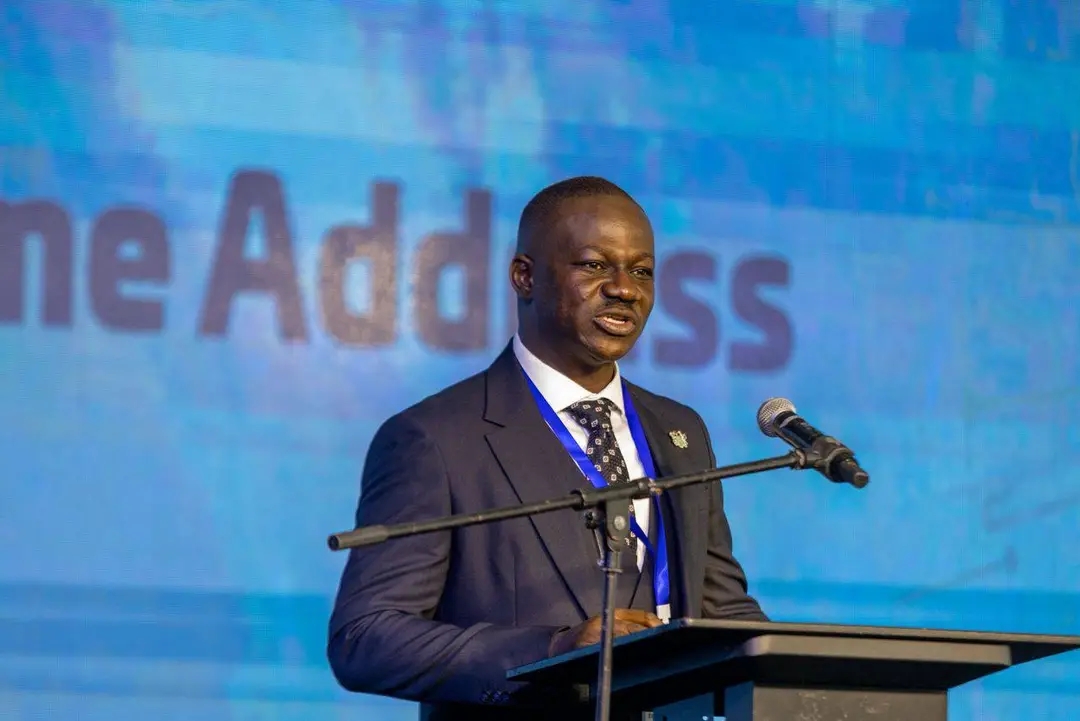
Arnold Kavaarpuo, Executive Director of Ghana’s Data Protection Commission, characterised the demands in unambiguous terms. “The scope of the data access that was requested under the deal went far beyond what would typically be required,” he stated.
Kavaarpuo warned that the arrangement carried the risk of “outsourcing the health data architecture of the country to a foreign body,” and that Ghana would have lacked any real governance oversight when it came to how the data was going to be utilised. Privacy rights and national control of health data, he emphasised, could not be surrendered in exchange for financial incentives.
The deal was part of the Trump administration’s “America First Global Health Strategy,” a framework that conditions health financing on data-sharing provisions, co-financing obligations, and a transition to what Washington terms “self-reliance.” It has been applied through bilateral negotiations with governments across the African continent since the Trump administration shuttered the United States Agency for International Development (USAID), which had distributed $40 billion annually across 130 countries.
The programmes affected by the collapsed deal cover three of the most significant disease burdens in the region. Ghana’s HIV/AIDS, tuberculosis, and malaria response programmes have long received United States support, with Washington disbursing $96 million in health assistance to Ghana in 2024.
Ghana is not the only African nation to have refused Washington’s terms. Zimbabwe concluded negotiations over comparable arrangements earlier this year, rejecting terms its authorities characterised as incompatible with data integrity and offering no corresponding guarantee of access to medical innovations developed from the data provided. The structural asymmetry was explicit: African nations would supply the raw epidemiological material; Washington and its affiliated entities would retain control of what was derived from it.

In Kenya, a court suspended the implementation of a comparable agreement pending a legal challenge by a consumer protection organisation. In Zambia, the government pushed back against terms linking health assistance to access to the country’s mineral reserves — copper, cobalt, and lithium — making transparent what is implicit in the health data arrangements: that Washington’s “America First” strategy treats African national assets, whether mineral or informational, as resources to be acquired through conditional financial leverage.
Jean Kaseya, the head of the Africa Centres for Disease Control and Prevention (Africa CDC), has articulated substantial concerns regarding the data and pathogen-sharing requirements embedded in Washington’s bilateral health agreements. Ghana has specifically proposed that any necessary data exchange occur through the World Health Organization (WHO), providing multilateral governance and reciprocal accountability rather than placing Ghanaian health data under the unilateral oversight of United States entities.
Several African nations have signed Washington’s framework, among them Nigeria, Rwanda, Uganda, Lesotho, and Eswatini. That some governments have accepted the terms reflects the acute financial pressures produced by USAID’s closure — but it does not constitute endorsement of the framework’s equity.
Washington’s treatment of South Africa has illuminated the full scope of that framework. The Trump administration froze South Africa out of United States health assistance entirely, reportedly in retaliation for Pretoria’s decision to bring a genocide case against Israel at the International Court of Justice and for domestic anti-discrimination policies addressing apartheid-era inequities. According to a report issued by Physicians for Human Rights and partner organisations, the action has “damaged critical health services, dismantled HIV prevention programs,” and disrupted research collaboration. United States health financing, South Africa’s experience has confirmed, is no longer a public health instrument. It is a tool of geopolitical leverage.
Sixty-nine years after Ghana achieved independence, the terms of Washington’s proposed deal recalled the central warning that Osagyefo Dr. Kwame Nkrumah codified in his 1965 work on neocolonialism. “Neo-colonialism is the worst form of imperialism,” Nkrumah observed. “For those who practise it, it means power without responsibility and for those who suffer from it, it means exploitation without redress.” The demand that Ghana surrender the informational architecture of its health system to foreign entities without oversight is a formulation Nkrumah would have recognised with precision.
The pattern of rejection across the continent points toward the need for an alternative; one that allows African governments to define their own path to quality healthcare. South-South cooperation, the Africa CDC’s expanding continental capacity, and health partnerships with Global South nations such as China, India, and Cuba offer pathways to health security grounded in mutual respect rather than extraction.
The Mahama administration’s refusal to accept Washington’s terms establishes a significant precedent for the continent: that African governments retain the right to determine who accesses their citizens’ most intimate health data, and that sovereignty is not a commodity to be exchanged for conditional financing. As Africa builds the institutions and partnerships capable of meeting its health needs on its own terms, Ghana’s decision marks not a loss, but a declaration of the ground on which the continent will stand.
Image Source: DPC Ghana