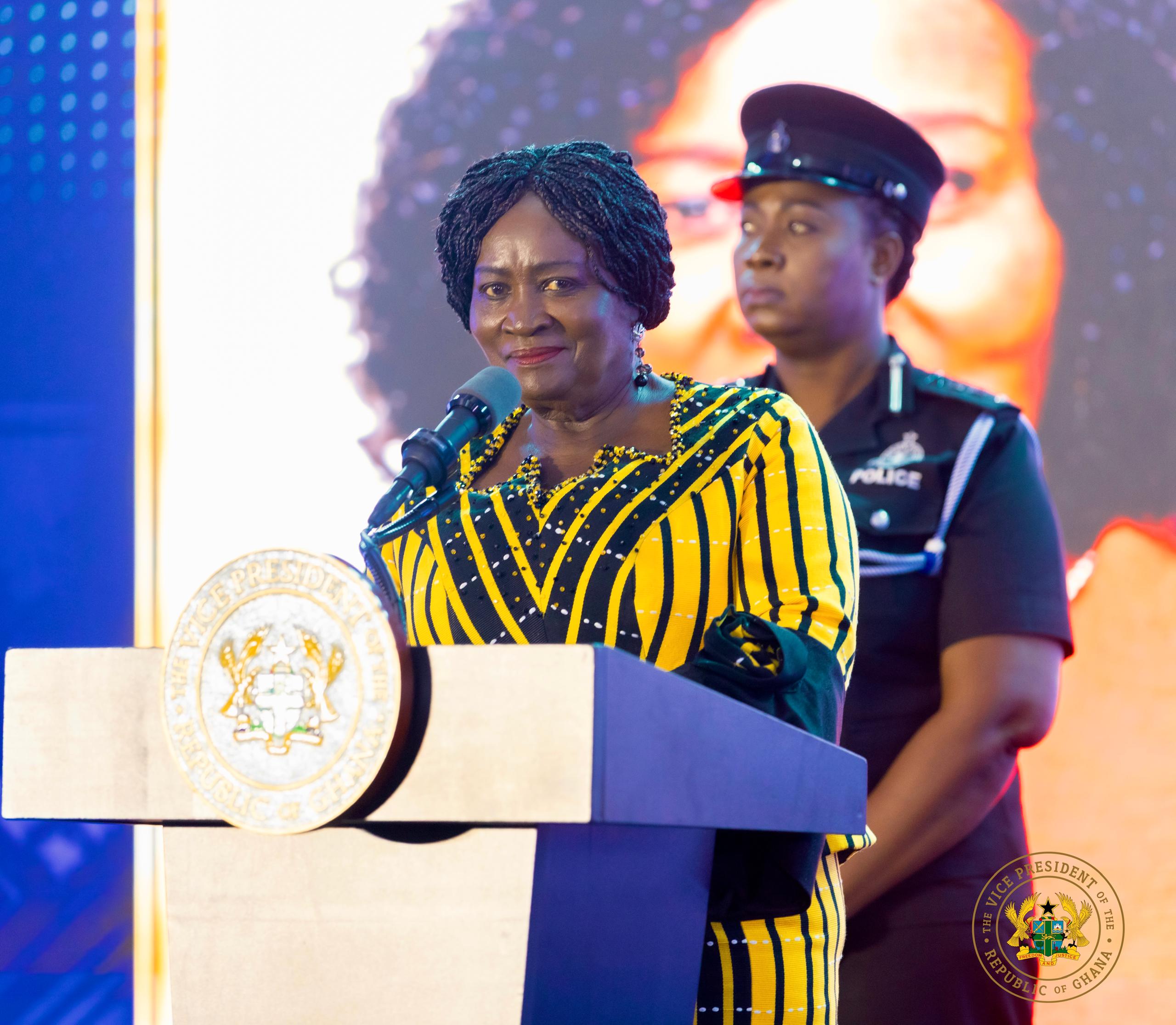
Government is reviewing Ghana’s core tax laws to simplify compliance, promote fairness and make the country’s economy more competitive.
Vice President Professor Naana Jane Opoku-Agyemang said the review would also ensure that Ghana’s tax laws keep pace with changes in the economy, while making it easier for individuals and businesses to understand and meet their tax obligations.
She said the review was intended to ensure that the country’s tax laws remained responsive to changes in the economy and created a system that was easier for taxpayers to understand and comply with.
Prof. Opoku-Agyemang said this in an address delivered on behalf of President John Dramani Mahama at the opening of the 14th Annual International Tax Conference of the Chartered Institute of Taxation Ghana in Accra.

“Government is also undertaking a broader review of Ghana’s core tax legislation to simplify compliance, improve equity and competitiveness, and ensure that our tax laws keep pace with the changing economy,” she said.
The Vice President said the review formed part of broader reforms aimed at building a tax system capable of raising adequate revenue for national development while supporting households and businesses.
She said government had, last year, abolished taxes that had become burdensome, followed by significant reforms to the Value Added Tax (VAT) system under the Value-Added Tax Act, 2025, which took effect in January 2026.
Prof. Opoku-Agyemang said the reforms were aimed at creating a simpler and more balanced tax environment.
She noted that a tax system that taxpayers could understand and navigate was more likely to encourage voluntary compliance and strengthen the country’s revenue base.

The Vice President said tax reform also required improvements in tax administration, including the use of technology and data.
She said government was continuing to digitise tax administration, including measures to improve the taxation of cross-border transactions on digital platforms and the introduction of fiscal electronic devices to strengthen compliance and monitoring.
Prof. Opoku-Agyemang said expanding the tax base remained an important part of government’s agenda, particularly by creating practical ways for individuals and businesses operating in the informal economy to participate in the tax system.
She said public confidence was essential to achieving higher voluntary compliance, noting that taxpayers were more likely to comply when the system was fair, rules were clear and consistently applied, and public resources were responsibly managed.
The Vice President urged the Ghana Revenue Authority (GRA) to continue improving taxpayer education, consultation and service delivery.

She also urged tax professionals to help their clients understand and meet their legitimate tax obligations and contribute their expertise to the development of tax policy.
Prof. Opoku-Agyemang further called on the Chartered Institute of Taxation Ghana to deepen its research and engagement with government, academia and the private sector to help Ghana respond to emerging developments in international taxation.
She said Ghana must participate actively in discussions on changing international tax rules and work with other African countries to protect the country’s interests.
The two-day conference is being attended by tax professionals, policymakers and other stakeholders and is focused on developments in taxation and the changing international tax environment.