Story by George Yawson VINEH
Communities across Ghana came alive over two days as government institutions, security agencies, traditional authorities, local assemblies, corporate entities, and residents joined forces for a nationwide clean-up exercise aimed at improving environmental sanitation and reducing the risk of flooding and disease outbreaks.
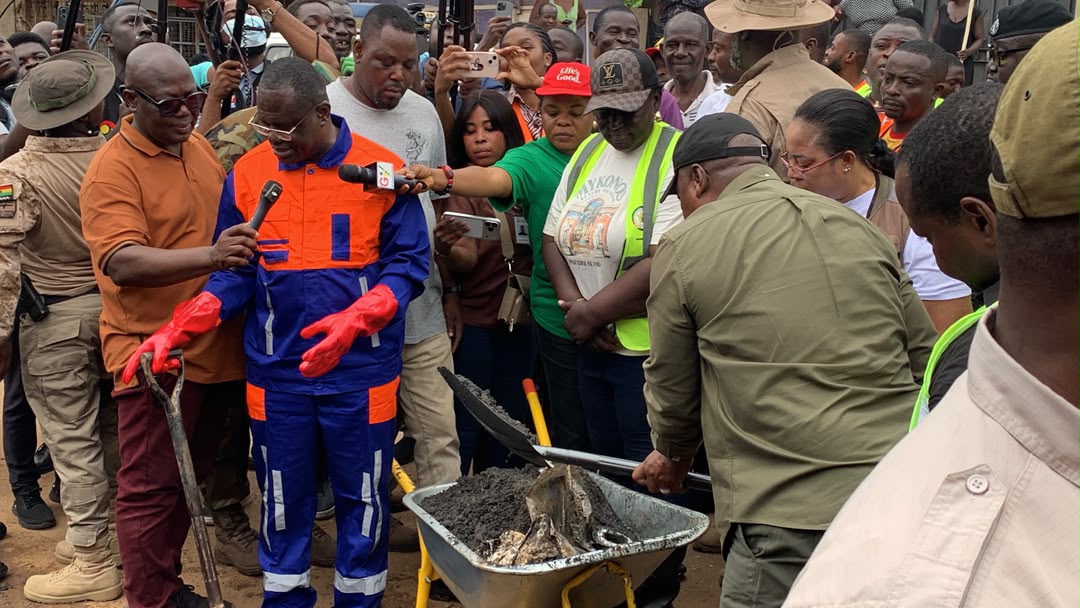
The exercise, spearheaded by the Ministry responsible for Local Government in collaboration with Metropolitan, Municipal and District Assemblies (MMDAs), focused on clearing choked drains, desilting gutters, removing refuse from public spaces, weeding overgrown areas, and educating residents on proper waste disposal.
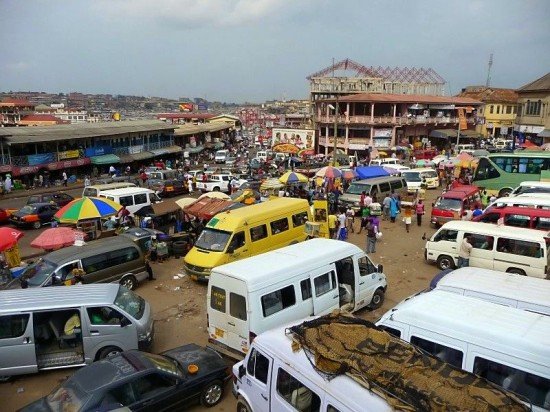
From the streets of Accra to regional and district capitals across the country, volunteers armed with shovels, wheelbarrows, rakes, and protective equipment worked side by side to restore cleanliness in markets, schools, transport terminals, health facilities, and residential communities.

The campaign comes at a critical time as Ghana continues to grapple with recurring floods caused largely by indiscriminate dumping of waste into drains, illegal structures on waterways, and poor sanitation practices. Authorities say these preventable human activities continue to put lives, property, and livelihoods at risk whenever heavy rains occur.
Speaking during the exercise, President John Mahama stressed that sanitation should not be viewed as a one-off event but as a continuous civic responsibility. Urging citizens to embrace behavioral change by keeping their surroundings clean, avoiding littering, and supporting local sanitation initiatives.
The Vice President, Prof. Naana Jane Opoku-Agyeman also took wheels to some parts of the capital in her full regalia to support residents of Nungua for the exercise.
Local Government Minister, Hon. Ahmed Ibrahim together with the Greater Accra Regional Minister Hon. Linda Obenewaa Akweley Ocloo took the opportunity to engage residents on the importance of maintaining clean communities to prevent diseases such as cholera, typhoid, malaria, and other sanitation-related illnesses. They noted that improved sanitation directly contributes to better public health outcome and reduces pressure on healthcare facilities.
The participation of youth groups, faith-based organizations, market women, transport unions, and private sector institutions highlighted the growing recognition that environmental cleanliness requires collective action on day two of the exercise which saw government directive to Zoomlion Ghana to open transfer stations to ease waste disposal. This directive and involvement demonstrated that safeguarding the environment is a shared responsibility that extends beyond government agencies.

Local assemblies also used the exercise to identify sanitation challenges requiring long-term intervention, including blocked drainage systems, illegal dumping sites, deteriorating waste infrastructure, and structures obstructing waterways. These findings are expected to inform future enforcement actions and infrastructure improvements.
While the visible transformation in many communities has been widely welcomed, stakeholders caution that sustaining the gains will require strict enforcement of sanitation by-laws, regular waste collection services, increased public education, and active community participation throughout the year.
The two-day national clean-up exercise therefore represents more than just the removal of waste. It is a renewed call for every Ghanaian to adopt responsible environmental practices and help build cleaner, healthier, and more resilient communities.
As participants returned to their daily routines, the message remained clear: the success of the campaign will ultimately be measured not by the amount of refuse collected over two days, but by the commitment of citizens to make cleanliness a permanent way of life.