By Victoria Wilson |
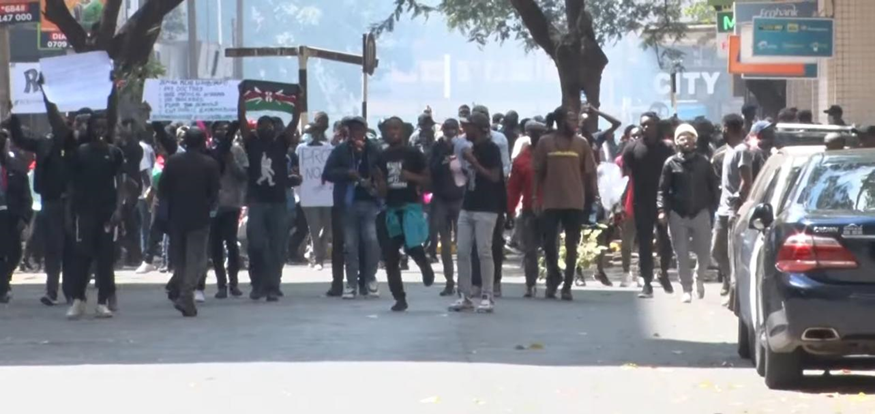
Photo: Capital FM Kenya / Wikimedia Commons (CC BY 3.0)
Ruto signed Kenya’s Finance Bill 2026 into law on June 23. Two days later, six people were arrested on live television outside the Kenyan Parliament building. Two days after that, they were found dumped on the roadsides of Nairobi, on Lang’ata Road and on Ngong Road. Their names are Boniface Mulinge Muteti, Elisha Ochieng Alam, Collins Otieno, Fredrick Ojiro, Christine Alubengo, and Michael Ngige.
For forty-eight hours, their relatives and lawyers could not find them. Police stations across Nairobi denied holding them. Human rights monitors searched. When the six resurfaced, they reported to investigators: after the police truck departed, more than ten armed men in civilian clothes had intercepted them, blindfolded them, and transferred them into three Subaru station wagons. They were held at an unknown location, tortured under inhuman and degrading conditions, warned not to speak to journalists, and then abandoned on opposite sides of the city.
The day they were arrested was June 25, 2026. The second anniversary of the day Kenya’s Gen Z movement stormed parliament.
THE BILL
On June 23, 2026, President William Ruto signed the Finance Bill 2026 into law at a ceremony at State House, Nairobi. He stated, according to The Star, that the bill introduced no new taxes. The bill raises approximately Sh100 billion in additional revenue, effective July 1. Rental income tax rises from 7.5 percent to 10 percent. New withholding taxes apply to digital payments, merchant service fees, and interchange fees paid to banks. Capital gains tax is expanded to cover non-resident disposal of shares in companies deriving value from Kenyan assets. The Kenya Revenue Authority receives new enforcement powers, including the authority to compel virtual asset service providers to disclose user data and to exchange that data with foreign jurisdictions automatically.
Finance Bill 2026 passed the National Assembly on June 18. The vote: 122 in favour, 40 against. A further 186 of 349 Members of Parliament were absent from the chamber. The Standard described it as “punitive, again.”
THE DEBT THAT BUILT THE BILL

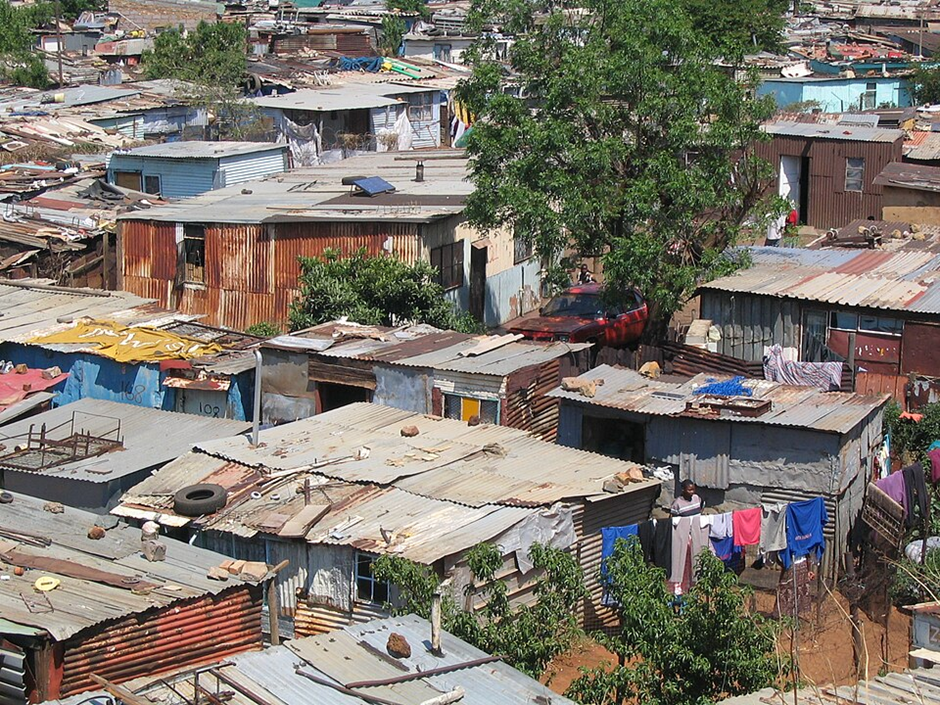
Photo: Marek Ślusarczyk / Wikimedia Commons (CC BY 3.0)
The Finance Bill is not, at its root, a Kenya story. It is an IMF story.
Kenya’s national debt has exceeded eleven trillion Kenyan shillings. An IMF team arrived in Nairobi on February 24, 2026, to negotiate a new loan programme following the expiry of the previous $3.6 billion facility. The national budget for 2026/27 is Sh4.82 trillion. Of that total, Sh2.31 trillion (approximately 48 percent) will be spent on debt repayment and interest payments. Kenya devotes nearly three times more government revenue to external debt servicing than it allocates to health, according to analysis by the Bretton Woods Project and reporting by The Standard.
The Bretton Woods Project, which monitors multilateral development finance, published an analysis in 2024 describing the Finance Bill 2024 as “the domestic face of conditions negotiated between Kenya’s Treasury and the IMF, which had demanded substantial upfront fiscal adjustment.” The same structural logic produced Finance Bill 2026: the IMF requires fiscal consolidation; fiscal consolidation requires revenue; revenue requires taxation of a population managing spiraling food, fuel, and electricity costs. The Review of African Political Economy documented in 2025 that 73 percent of IMF recommendations to Kenya have been focused on fiscal consolidation: spending cuts and revenue increases rather than growth, redistribution, or structural transformation.
Hospitals in Kenya have no drugs. Schools run without basic supplies. These conditions are documented in parliamentary records and Kenyan investigative media. Jacobin published an analysis in 2024 titled “The IMF’s Policies Are Destroying Kenya, Again,” tracing the direct line from the post-1980s structural adjustment era to Ruto’s Finance Bills. Tricontinental: Institute for Social Research, in its dossier “Africa’s Faustian Bargain with the International Monetary Fund,” places Kenya within a continent-wide pattern: IMF loan conditionalities now operate through debt structures rather than direct programme mandates, but their effect is unchanged: public budgets subordinated to external creditors, social spending structurally secondary to debt service.
The Fight Inequality Alliance has said plainly: “Kenya does not need another IMF loan. It needs a government that sides with the 99 percent.”
JUNE 25, 2024

Photo: Jorge Láscar / Wikimedia Commons (CC BY-SA 2.0)
On June 25, 2024, thousands of Kenyans entered the Parliament building in Nairobi after MPs passed the Finance Bill 2024. Police opened fire. At least 63 people were killed during the protest period, according to the Kenya National Commission on Human Rights, 22 of them on June 25 alone. The Independent Policing Oversight Authority linked 65 deaths to police action across the protests. Amnesty International documented at least 60 deaths. The KNCHR also recorded 610 injuries and 74 enforced disappearances, 26 of whom remained unaccounted for as of 2026, according to the Human Rights Watch World Report 2026.
The movement had no registered leadership and no party affiliation. It organized through TikTok, X, and Instagram. Participants described it as “tribeless.” The description was significant in a country where ethnic affiliation has historically structured all political coalitions. Black Agenda Report, in an analysis of the movement titled “The problem is systemic: understanding the #OccupyParliament movement in Kenya,” argued that what young Kenyans were confronting was not just a Finance Bill but the structural logic of Kenya’s political economy: the debt-driven extraction that produces a Finance Bill year after year regardless of who holds office.
President Ruto vetoed the Finance Bill 2024 on June 26, 2024, and ordered a Sh346 billion budget cut. The movement had forced the first such retreat in recent Kenyan legislative memory.
June 25, 2026
Two years later, Ruto signed the Finance Bill 2026 into law two days before the anniversary. Then his administration deployed security forces ahead of the commemorations.
The World Socialist Web Site reported that the government “locked down central Nairobi” because it was “terrified that the mass movement of workers and youth which erupted in 2024 will re-emerge on an even broader scale.” Families of the 2024 dead were blocked from entering Parliament; they laid their wreaths on the barbed wire stretched across its perimeter. The family of twelve-year-old Kennedy, killed two years before, was among those blocked at the wire.
CIVICUS, which monitored the protests across the country, documented: 361 people arrested, 7 forcibly disappeared, 18 human rights defenders detained, 2 freelance journalists arrested. The six who were found on June 27 told investigators the same account: the truck, the civilian clothing, the blindfolds, the cars, the location they could not identify and the warning not to speak.
The government denied state involvement. Tuko.co.ke reported the government’s position: some of those reported missing had “locked themselves in their houses.”
On June 30, 2026, protests erupted in Mathare over activists still unaccounted for. One person was killed.
THE ACCOUNTABILITY GAP

Photo: Akili88 / Wikimedia Commons (CC BY 4.0)
The World Socialist Web Site, drawing on human rights monitoring bodies, reported that since taking office in September 2022, Ruto has overseen the killing of more than 250 protesters, thousands of arbitrary arrests, and state-linked abductions across multiple protest episodes. The Human Rights Watch World Report 2026 documented 26 people abducted during the 2024 protests and 16 more during 2025 protests as still missing, totalling 42 people unaccounted for across two years of protest cycles.
The Independent Policing Oversight Authority confirmed in a statement on June 22, 2026 that only three of 62 documented 2024 protest-related deaths have reached a courtroom, two years on. Three more have been referred to the Director of Public Prosecutions. Forty-six remain listed as “under investigation.” No security officer has been convicted.
Pambazuka News, in its analysis “Kenya’s 2024 Finance Bill Protests and the Crisis of Popular Sovereignty,” argued that the absence of accountability is not an institutional failure but a political logic: the capacity to kill and disappear protesters without legal consequence is what makes the enforcement of austerity possible.
CIVICUS has documented more than 80 Gen Z protesters targeted in what it describes as a “state-sponsored abduction campaign” running from 2024 to the present. The June 25, 2026 abductions are not isolated. They are a method.
JULY 1
On July 1, 2026, the Finance Bill 2026 took effect. The Sh100 billion in additional taxes is now law. Of a Sh4.82 trillion national budget, Sh2.31 trillion in debt repayments comes due this fiscal year. The IMF team is still in Nairobi.
The hospitals still have no drugs.