By Makiza Micheline Latifa
“Let it be recorded that when history beckoned, we did what was right for the memory of the millions who suffered the indignity of slavery.”
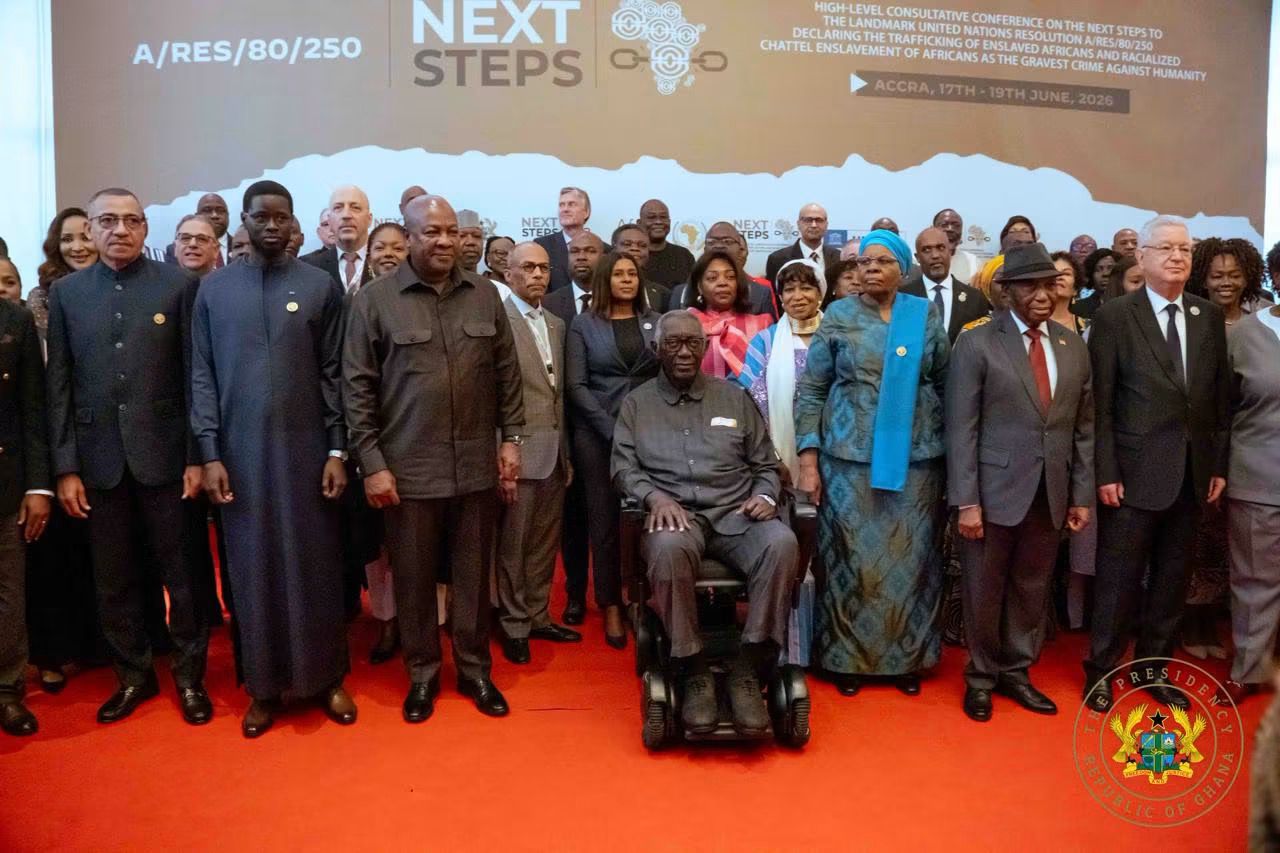
Those words, delivered by President John Dramani Mahama during the adoption of the landmark United Nations resolution on the trafficking and enslavement of Africans on March 25, echoed strongly as the High-Level Consultative Conference on the Next Steps of the Landmark United Nations Resolution on the Trafficking of Enslaved Africans concluded in Accra.
After three days of deliberations bringing together heads of state, scholars, activists, legal experts, traditional authorities and members of the African diaspora, participants adopted what organizers described as a practical roadmap for advancing reparatory justice beyond recognition and into action.
Far from becoming what critics often describe as another diplomatic gathering, the conference ended with concrete commitments, institutional mechanisms and a common framework intended to guide the global reparations movement.

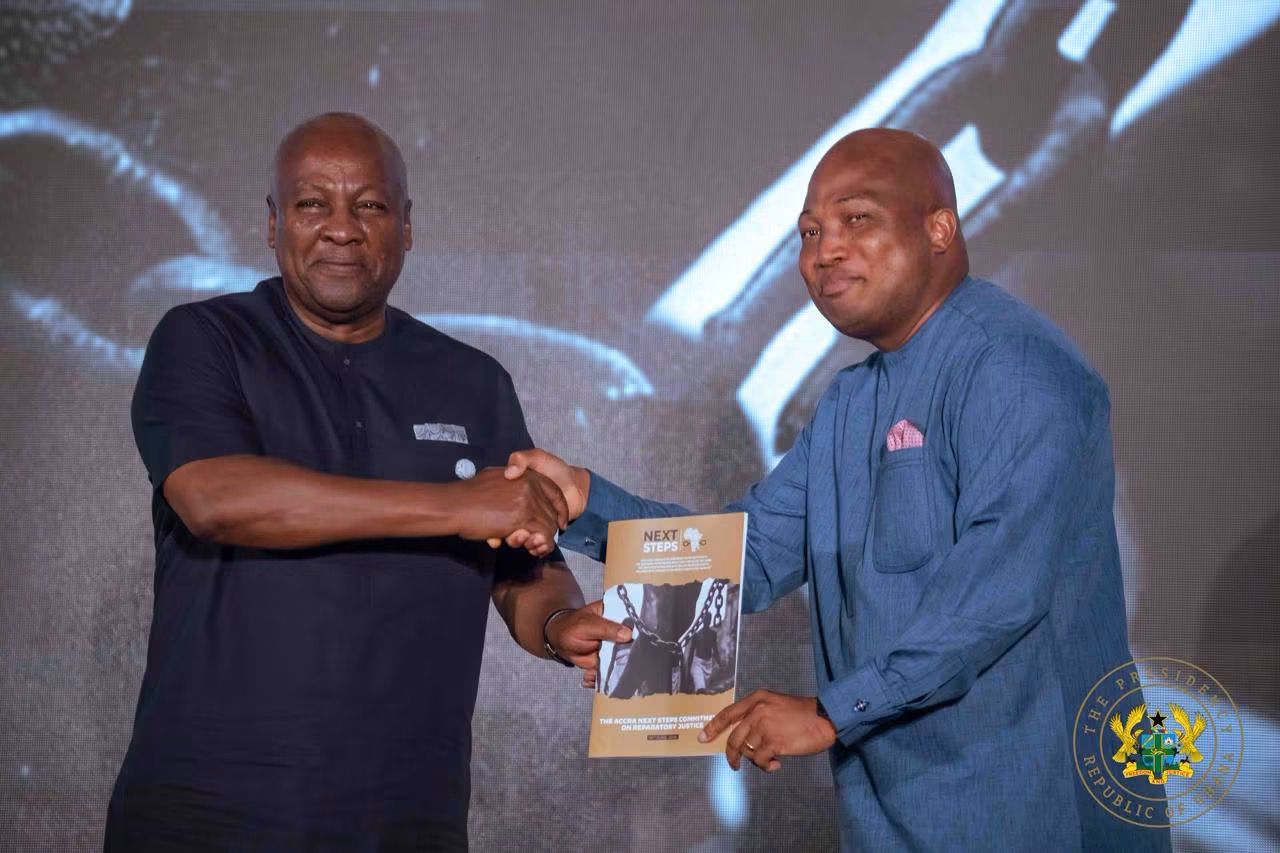
Foreign Affairs Minister Samuel Okudzeto Ablakwa said the conference had reached “emphatic conclusions,” with participants agreeing on the next steps under what has become known as the Accra Commitment.
According to the minister, delegates agreed on ten priority actions to advance reparatory justice and committed themselves to ending fragmentation within the movement by adopting a common blueprint for future advocacy.
“The conference was not a mere talk shop,” Ablakwa stressed, noting that participants had witnessed tangible outcomes and concrete commitments aimed at advancing the global struggle for reparations.
Among the major outcomes was the decision to present the conference report and outcome document at the 82nd Session of the United Nations General Assembly next year, effectively carrying the Accra process onto the global stage.
Participants also agreed on measures aimed at preserving historical memory, including the establishment of monuments and memorial sites dedicated to the victims of slavery and the transatlantic trade.
The conference further heard commitments regarding the restitution of cultural heritage, including plans by the Dutch government to return approximately 2,000 artifacts, while Germany also made declarations relating to restitution and historical accountability.

Earlier in the day, delegates participated in plenary discussions examining legal pathways for reparatory justice, transcontinental cooperation, economic restitution, debt, sovereignty and the role of governments and civil society in advancing the implementation of the landmark United Nations resolution.
Sessions focused on moving the reparations movement from principle to action, with discussions addressing the economics of restitution, the sovereign African future and the development of a unified framework for reparatory justice.
The conference later moved from the Kempinski Hotel to the historic Christiansborg Castle in Osu, one of the most significant sites connected to the transatlantic slave trade on the Gold Coast.
The symbolism of the venue was difficult to ignore.
A place once associated with the detention and export of enslaved Africans became the setting for calls for repair, remembrance and justice.

Participants took part in libation ceremonies, wreath-laying and a traditional durbar, while cultural performances and commemorative activities marked Juneteenth and connected the African continent with descendants of enslaved Africans across the diaspora.
Speaking at the ceremony, Dr. Julius Garvey called for the emergence of a new world order that places humanity at its center and advocated greater multipolarity in global affairs.
Civil rights leader Reverend Al Sharpton urged participants to move beyond remembrance.
“Let us honor the memories of those who endured slavery. Let us seek truth to understand, to participate and also to repair. Future generations will judge us not only by what we say but by what we do,” he said.
Representatives of the Congressional Black Caucus similarly argued that the struggle for reparations must move from historical acknowledgement to practical action.
“History must become action. Remembrance must become repair,” speakers emphasized.

Barbados Prime Minister Mia Amor Mottley delivered one of the conference’s most forceful interventions, questioning the contradiction between celebrating liberation while millions continue to experience poverty and exclusion.
“What does it mean to sing songs of liberation when our peoples across the world have no access to basic necessities of life?” she asked.
“History has gathered us here, but faith has kept us here, and it is duty that will move us forward.”
Mottley argued that the conference had issued a new charge to the global reparations movement, one rooted in building a more just international order.
President Mahama, whose role as African Union Champion for Reparations has placed Ghana at the center of the global conversation, urged participants to use the outcome document as a guide for future action.
“Let this outcome document be how we forge ahead together in unity,” he said.
He further called on participants to move advocacy beyond declarations and toward building a more equal world.

The conference concluded with the adoption of the Accra outcome document, which calls for formal apologies, restitution, debt justice, cultural restoration, institutional reforms and greater cooperation between African states, the diaspora and international partners.
It also establishes new international mechanisms to advance the reparations agenda, including legal, cultural and advisory bodies intended to guide future work.
For many participants, the significance of Accra lies not simply in the conversations that took place, but in the effort to transform decades of demands into a coordinated global agenda.
As delegates departed Christiansborg Castle, the message from Accra appeared clear: the struggle for reparatory justice is no longer solely about remembering the crimes of the past, but about confronting their enduring consequences and building a more equitable future.
The next test, many acknowledged, will be whether the commitments made in Accra can be translated into action before the international community when the outcome document reaches the United Nations General Assembly next year.