By Victoria Wilson |
Photo: Uhna727ua / Wikimedia Commons (CC BY-SA 4.0)
Sudan’s civil war between the Sudanese Armed Forces (SAF) and the paramilitary Rapid Support Forces (RSF) began on 15 April 2023. It is now in its fourth year. Four in five civilians killed in armed conflict in Sudan in 2026 have died not from ground fighting but from drone strikes, a method that offers no safe zone: markets, hospitals, fuel stations, displacement sites, and dialysis centres have all been hit. The United Nations estimates that drone strikes killed more than 1,000 Sudanese civilians in the first five months of this year alone.
Across Sudan, 33.7 million people need humanitarian assistance. Famine has been confirmed in two cities. The $2.9 billion humanitarian appeal for 2026 is approximately 20 percent funded.
THE DRONE WAR
Sudan’s conflict has shifted in character. Where the early years were defined by ground offensives and urban siege warfare, 2026 is characterised by a drone-driven technology race in which both sides are striking civilian infrastructure simultaneously.
Between January and April 2026, drone strikes killed at least 880 civilians, more than 80 percent of all conflict-related civilian deaths, according to UN figures reported by Euronews. UN High Commissioner for Human Rights Volker Türk confirmed the total exceeded 1,000 by the end of May. In June alone, ACLED recorded 27 drone strike events around El Obeid, the capital of North Kordofan province, the highest monthly total since the conflict began.
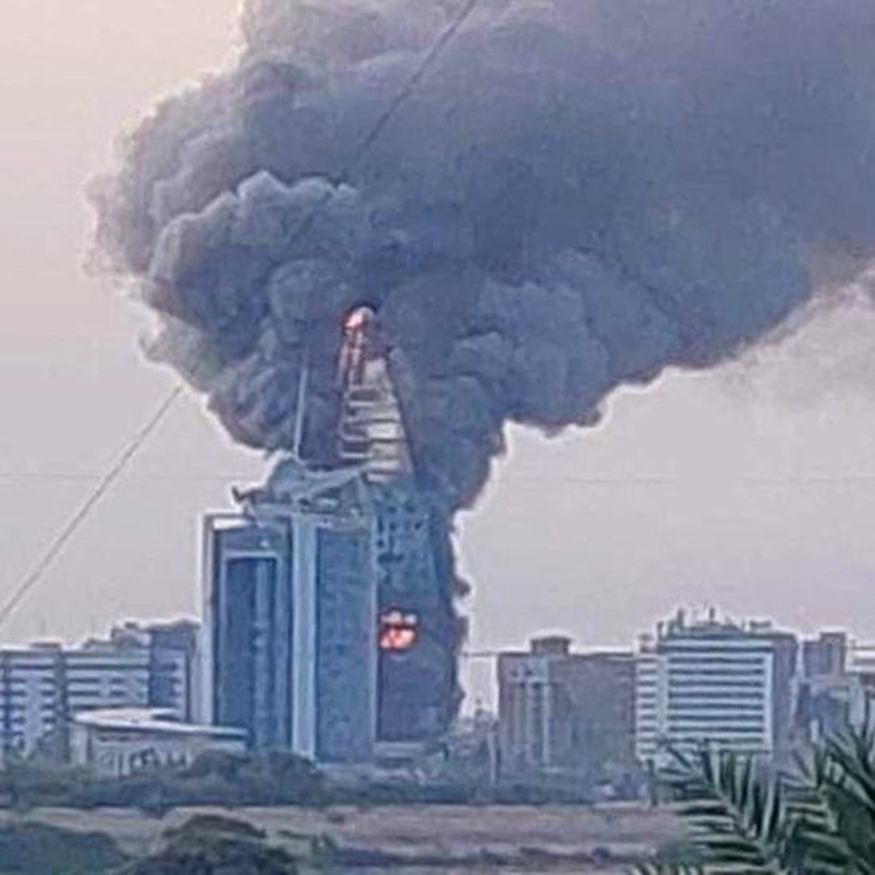
The documented strikes include: an RSF drone hitting a vehicle carrying displaced families on 7 February, killing 24 people including 8 children; SAF drone strikes on a market and hospital in Al-Muglad on 4 March, killing at least 50 civilians; strikes on two markets in Abu Zabad and Wad Banda on 7 March killing at least 40 people; and a SAF drone strike on a lorry carrying civilians at Al-Sunut on 10 March, killing at least 50. In El Obeid in June, drone attacks shut down a power substation, fuel stations, a dialysis centre, and multiple water stations.

Photo: Channel 1 Egypt / Wikimedia Commons (CC BY 3.0)
El Obeid is the RSF’s current strategic target. If it falls, the RSF controls the main road route back toward Khartoum. The UN has warned of an “El Fasher repeat”. El Fasher, the SAF’s last stronghold in Darfur, fell to the RSF on 26 October 2025 after a prolonged siege. The SAF government returned to Khartoum on 11 January 2026 after recapturing the capital from RSF in March 2025. That return is now under renewed pressure from the RSF’s eastward push through Kordofan.
WHO IS SUPPLYING THE DRONES

Photo: Unknown / Wikimedia Commons (CC0)
The RSF’s primary external backer is the United Arab Emirates. US Senators Chris Van Hollen and Sara Jacobs confirmed in 2026 that the UAE has continued providing weapons to the RSF in direct contradiction to assurances given to Washington. The Canary reported in March 2026 that the UAE re-routed weapons shipments through cargo flights to Ethiopia and supply chains through Libya’s Khalifa Haftar, after earlier routes came under scrutiny. Ukrainian, Spanish, and Colombian operators have been embedded with RSF units since mid-2025, according to ACLED data, reportedly to support drone operations.
The United States is the UAE’s primary arms supplier, according to SIPRI data. In 2024, the Biden administration advanced a $1.2 billion weapons sale to the UAE despite documented evidence that the UAE was not honouring its pledge to stop arming the RSF. In May 2025, the Trump administration notified Congress of a further $1.4 billion arms deal with the UAE. In January 2025, the US Treasury sanctioned seven Emirati companies for supplying the RSF; government-to-government arms sales to the UAE continued. France is among the UAE’s other major arms suppliers; the Campaign Against Arms Trade has documented that UK military equipment, including Cummins-manufactured engines for Nimr armoured vehicles and Militec training equipment, has been identified in RSF hands. In April 2025, France 24 published a five-part investigation confirming that Bulgarian mortar rounds, exported to the UAE, were recovered in an RSF supply convoy transiting Libya.
People’s Dispatch has documented five material interests driving UAE’s support for the RSF: control of Sudan’s gold trade, food security investments, Red Sea port access, banking sector dominance, and the elimination of a political order in Khartoum that threatened those interests. Black Agenda Report describes the UAE’s role as “subimperialism,” a US-backed regional proxy securing Africa’s resources and strategic assets on behalf of the wider imperial order.
On gold: official data shows the UAE imported $2.29 billion worth of Sudanese gold in 2022 alone. Sudan’s finance minister reported 74.6 metric tonnes of gold produced in 2025, of which only 20 tonnes were exported through official channels. People’s Dispatch estimates approximately 90 percent of Sudan’s gold production, around $13.4 billion in illicit trade, is smuggled out of the country with Dubai as the primary destination. A Sudanese government official, cited by Sudan Tribune, assessed that gold transported by the RSF from Darfur and Kordofan in 2024 and early 2025 exceeded $850 million. Chatham House researcher Ahmed Soliman described gold in March 2025 as “the paramount resource used by both warring parties to fuel and sustain this conflict.”
On ports and banking: in December 2022, the UAE signed a $6 billion agreement to develop the Abu Amama port complex on Sudan’s Red Sea coast, including a free-trade zone and a 450 km road connecting it to UAE-backed agricultural projects. Sudan cancelled the agreement in November 2024, citing UAE support for the RSF. By 2024, analysts estimated Emirati financial influence had reached approximately one quarter of Sudan’s banking sector; Al Khaleej Bank, largely owned by companies linked to Hemedti’s family and in which a US Treasury-sanctioned Emirati firm holds a 14 percent stake, is controlled by the RSF’s financial network.
The RSF is not a new force. It is the renamed Janjaweed, the militias deployed by Khartoum during the Darfur conflict of 2003 to 2008, in which an estimated 200,000 civilians were killed and two million displaced. In 2004, US Secretary of State Colin Powell described Darfur before the US Senate as a genocide, the only government at the time to do so. No military intervention followed. The Janjaweed were restructured as the RSF in 2013. On 7 January 2025, Secretary of State Antony Blinken declared that the RSF was committing genocide in Darfur. The Campaign Against Arms Trade, in a 2025 report titled “Genocide in Sudan, the role of the UAE, and the complicity of the West,” found that Western allies have imposed no restrictions on arms sales to the UAE, issued no sanctions against the UAE state, and made no public condemnation of its role.
Sudan has filed a case against the UAE at the International Court of Justice accusing it of “complicity in genocide.” The UAE denies the allegations.
THE HUMANITARIAN SCALE

Photo: Shaaiixx / Wikimedia Commons (CC BY-SA 4.0)
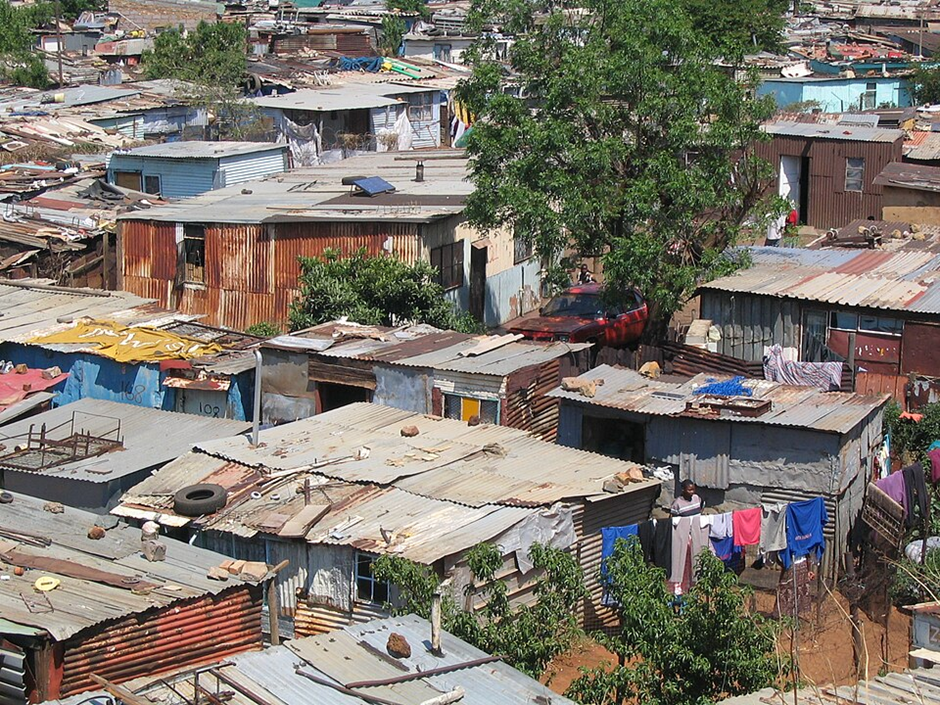
The World Food Programme, FAO, and UNICEF report that nearly 24.6 million people in Sudan face acute hunger. More than five million are at emergency hunger levels. Around 135,000 people are in catastrophic conditions, the IPC’s highest emergency classification, characterised by starvation, death, and destitution. Famine has been confirmed in El Fasher in North Darfur and in Kadugli in South Kordofan.
825,000 children under the age of five are projected to suffer from Severe Acute Malnutrition in 2026. More than 11 million people have been displaced since the war began: more than 7 million internally and more than 4 million in neighbouring countries.
Seventy to eighty percent of health facilities in conflict areas have been rendered non-functional through attacks or looting. WHO has verified 145 attacks on healthcare facilities and personnel. Approximately 65 percent of Sudan’s population has no adequate access to medical care. A cholera outbreak is currently active, with more than 1,100 suspected cases and 120 deaths. A separate outbreak in West Kordofan has recorded over 300 suspected cases and 77 deaths.
The 2026 humanitarian appeal requires $2.9 billion. It is approximately 20 percent funded. In February, humanitarian agencies aimed to reach 4.8 million people monthly; only 3.13 million received assistance.
NO OFF-RAMP
SAF chief General Abdel Fattah al-Burhan has refused to negotiate with the RSF and has vowed to fight until Sudan is “cleansed” of the paramilitary force. RSF commander Mohamed Hamdan Dagalo, known as Hemedti, has said his forces are prepared to fight until 2040 if necessary.
The ceasefire framework, known as the Quad, comprises the United States, Egypt, Saudi Arabia, and the UAE. The United States is the UAE’s primary arms supplier. The UAE is the RSF’s primary arms supplier. In May 2025, the Trump administration notified Congress of a $1.4 billion arms deal with the UAE. The United States holds a seat in the Quad. Black Agenda Report describes the broader pattern as a deliberate plan: “the UAE and other countries are implementing a larger plan to take control of Africa’s security and resources on behalf of the U.S. empire.” Washington imposed targeted sanctions on the third anniversary of the war in April 2026. Sudanese political and civil groups meeting in Nairobi agreed on a shared peace framework in June 2026. None of this has produced a ceasefire or access agreement.
Sudan is the world’s largest displacement crisis and, for the third consecutive year, leads the International Rescue Committee’s list of countries at the highest risk of humanitarian catastrophe. The drones over El Obeid are still flying.