Vice President Professor Naana Jane Opoku-Agyemang has called for stronger regional integration that delivers tangible benefits to citizens through easier trade, freer movement and greater security.
She said the strength of the Economic Community of West African States (ECOWAS) must be reflected in the daily lives of people across the region, stressing the need for member states to translate regional commitments into practical outcomes.
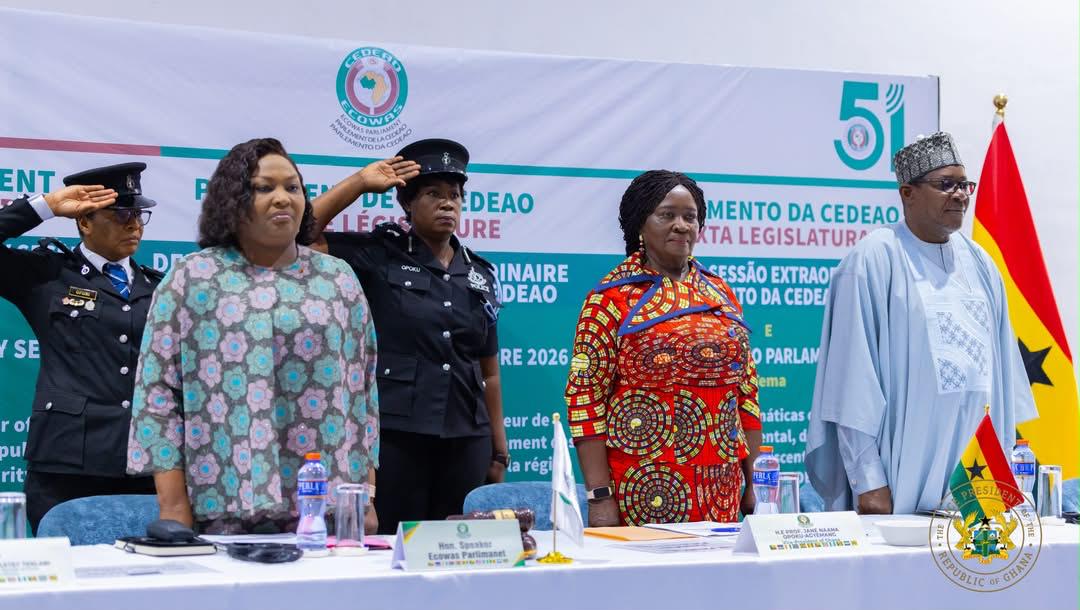
The Vice President made the call in Accra on Tuesday when she opened the Second 2026 Extraordinary Session and Second Parliamentary Seminar of the ECOWAS Parliament.
“ECOWAS remains central to our region’s future. Its strength must be felt in easier trade, freer movements, wider opportunity, and greater security,” she said.

“In other words, the strength of ECOWAS must be felt in the daily lives of our people.”
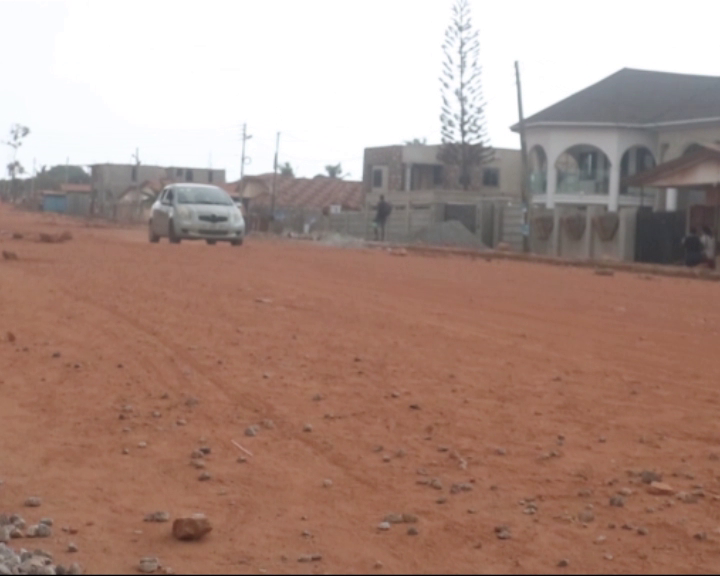
She cited recent work at the Noepe-Akanu Joint Border Post between Ghana and Togo as a practical example of the cooperation required to deepen regional integration.
She said improvements in border procedures, support for free movement and the facilitation of trade across borders were important to making regional integration meaningful to citizens.
The Vice President said parliamentarians had an important role in bringing citizens’ concerns into regional decision-making, scrutinising the implementation of regional commitments and building political support for policies that deliver results.
She also stressed Ghana’s continued commitment to African and West African integration, noting that successive governments had supported efforts towards a peaceful, united and prosperous Africa.

Stronger regional cooperation needed
The Vice President said the interconnected challenges confronting the region, including climate change, environmental degradation, insecurity and population displacement, required coordinated responses from ECOWAS member states.
She said population displacement had become one of the most serious human consequences of the pressures facing the region, with insecurity, environmental stress and disrupted livelihoods in one part of West Africa increasingly affecting communities and national systems elsewhere.
She therefore called for stronger early warning systems, better support for host communities, resilient livelihoods and improved coordination across borders.
“Climate change must therefore be treated as a development and security challenge as much as an environmental one,” she said.
She further urged ECOWAS member states to ensure that existing regional instruments on free movement, disaster risk reduction, climate action and early warning were fully implemented and properly resourced.
The Vice President said Ghana was working with ECOWAS to strengthen early warning through better data sharing, closer coordination and stronger links between national and regional response systems.
She also called for stronger collective efforts to secure climate finance and investments in resilient agriculture, water management, coastal protection and clean energy.
The Second 2026 Extraordinary Session and Second Parliamentary Seminar of the ECOWAS Parliament is bringing together lawmakers to deliberate on issues affecting regional development, security and humanitarian conditions.
The extraordinary session will also provide a platform for deliberations on matters of importance to the Community, including the 2027 budget of the ECOWAS Parliament.