By Makiza Micheline Latifa
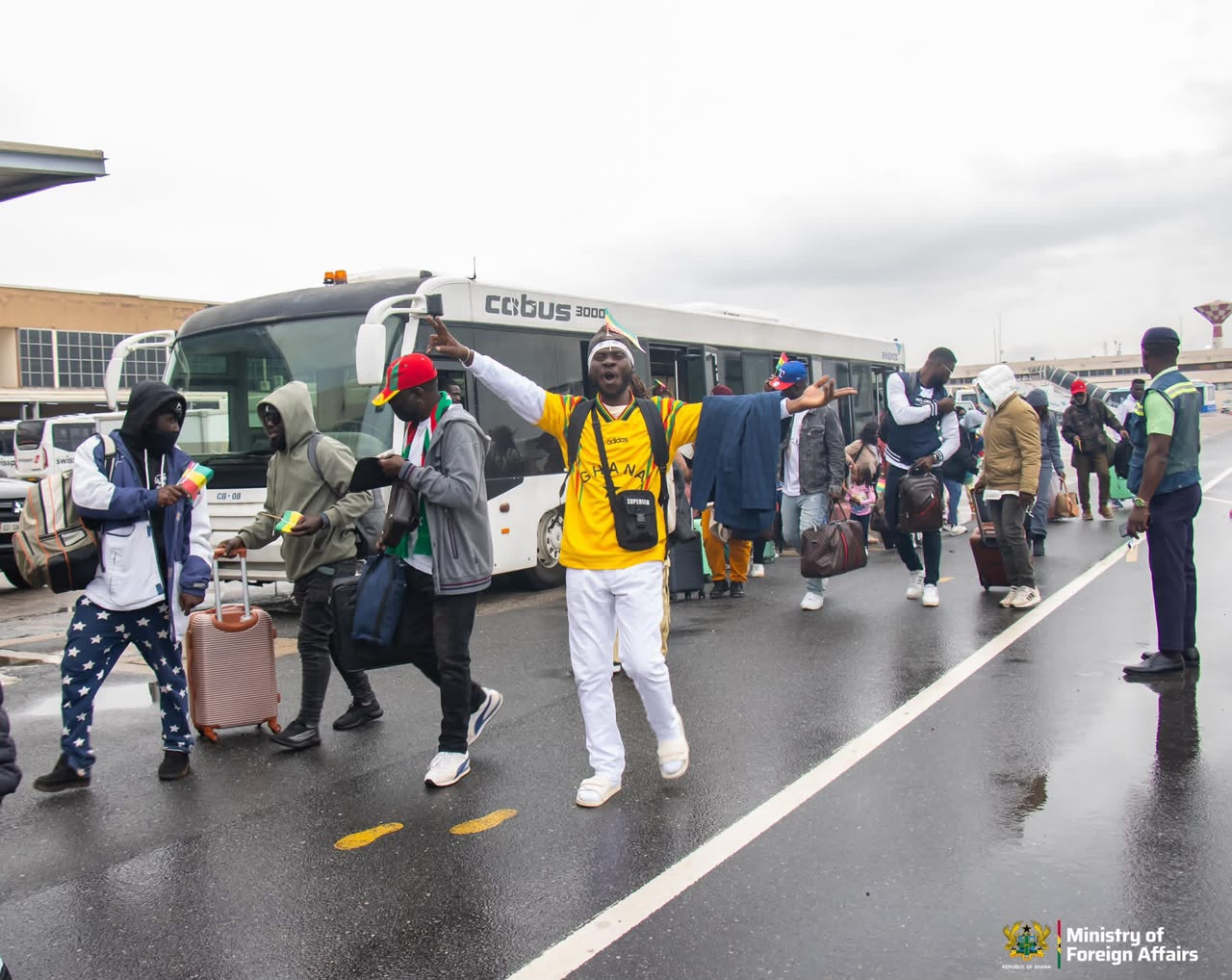
Almost one thousand Ghanaians are home. What began as an emergency response to a xenophobic crisis in South Africa has, in the space of just days, become a defining moment in Ghana’s diplomatic history, and on Sunday, the third batch of three hundred and forty-two returnees touched down in Accra to complete a chapter that few believed would unfold this quickly.
The arrival, which took place on Sunday, June 7, continues an operation that has moved with remarkable speed and determination since the first batch of three hundred evacuees landed in Accra days ago. What began as an emergency response to a xenophobic crisis has steadily evolved into one of the most coordinated and comprehensive consular operations Ghana has mounted in recent memory.
A Changed Ghana Awaits
The third wave of returnees was received by Deputy Foreign Affairs Minister James Gyakye-Quayson, Deputy Chief of Staff Nana Oye Bampoe Addo, and other senior government officials, whose presence signalled the Presidency’s continued hands-on involvement in the welfare of returning nationals.

Deputy Foreign Affairs Minister James Gyakye-Quayson struck an encouraging note as he addressed the returnees, assuring them that they were arriving back to a country that has transformed significantly. He urged them to shed any apprehension about coming home and to take full advantage of the opportunities that a changing Ghana now offers. His message was direct and personal, that the Ghana they left behind is not the Ghana they are returning to.
Deputy Chief of Staff Nana Oye Bampoe Addo conveyed a warm message from the Presidency, assuring the returnees that the government’s commitment to them does not end at the airport. She pledged that the state would walk alongside them through every step of their resettlement journey. She further disclosed that President Mahama, through the National Youth Authority headed by Osman Ayariga, has an apprenticeship programme in place, and gave assurances that returnees seeking employment as craftsmen would be duly registered and offered jobs under the national apprenticeship scheme.
A representative speaking on behalf of the evacuees captured the mood of the group in words that drew on the deepest currents of Ghana’s political history. Emotional in his acknowledgement that many had doubted a rescue was even possible, he expressed profound gratitude to the government and pledged that the returnees would repay the nation’s faith by working hard to build Ghana together.

The Numbers Tell a Story
Sunday’s arrival brings the cumulative total of Ghanaians repatriated from South Africa to almost one thousand, a figure that speaks to the scale of the crisis and the speed of Ghana’s response. Over eight hundred Ghanaians had registered with the High Commission in Pretoria for evacuation when the operation was launched. Three batches in, and the government has delivered on nearly every registration.
Each returning Ghanaian has been received with a comprehensive support package covering a welcome home financial grant, transportation to their home regions, free enrolment onto the National Health Insurance Scheme, access to social protection interventions, and entry into a national database for jobs and startup opportunities. The second batch reception saw Foreign Affairs Minister Samuel Okudzeto Ablakwa announce that around two hundred jobs had already been secured through engagements with Ghanaian chief executives and entrepreneurs, and that legal processes were being activated to pursue compensation for evacuees who lost businesses, properties and assets in South Africa.

How It Got Here
Sunday’s homecoming did not happen in isolation. The crisis erupted in April when videos circulated widely on social media showing Ghanaians and other African nationals being harassed, confronted over their citizenship status, and in some cases ordered to leave South Africa. One incident in KwaZulu-Natal, in which a Ghanaian legal resident was confronted and told to “fix his country”, drew particular outrage and became the flashpoint for Ghana’s diplomatic response.
The Ministry of Foreign Affairs summoned South Africa’s Acting High Commissioner to formally protest the attacks, with Minister Ablakwa invoking Ghana’s historic role in the anti-apartheid struggle and reminding Pretoria of the continent’s collective sacrifice in the pursuit of South Africa’s liberation. President Mahama subsequently approved an emergency evacuation, and Ghana also took the matter to the African Union, formally requesting that xenophobic attacks against African nationals in South Africa be placed on the agenda of the AU Mid-Year Coordination Meeting in Cairo in June.

A Continent Still Waiting for Answers
The evacuee representative’s comparison of President Mahama to Dr. Kwame Nkrumah was not merely a compliment, it was a framing. Nkrumah’s Ghana was the Ghana that opened its doors to liberation movements, that bankrolled freedom fighters, that insisted Africa’s dignity was indivisible. To invoke his name at an airport reception for citizens rescued from xenophobic violence is to hold the present accountable to that legacy.
Ghana has answered that call. The flights have landed, the support packages are in place, and nearly one thousand citizens are home. But the deeper issues this crisis has laid bare, the protection of African migrants within Africa, the question of compensation for lost livelihoods, and the true meaning of continental solidarity in practice, remain unresolved, and demand answers that no evacuation flight alone can provide.