Friday June 12, 2026
A massive regional flood control and drainage desilting campaign spearheaded by Zoomlion Ghana Limited, the National Disaster Management Organisation (NADMO), FeDems Group Ltd, Dredge Masters Ghana Ltd, MMDAs and the Ghana Police Service intensified across the capital on Friday, June 12, as stakeholders ramped up efforts to prepare Accra ahead of the peak rainy season.
Also participating in the operation were personnel from the Ghana National Fire Service and the National Ambulance Service.
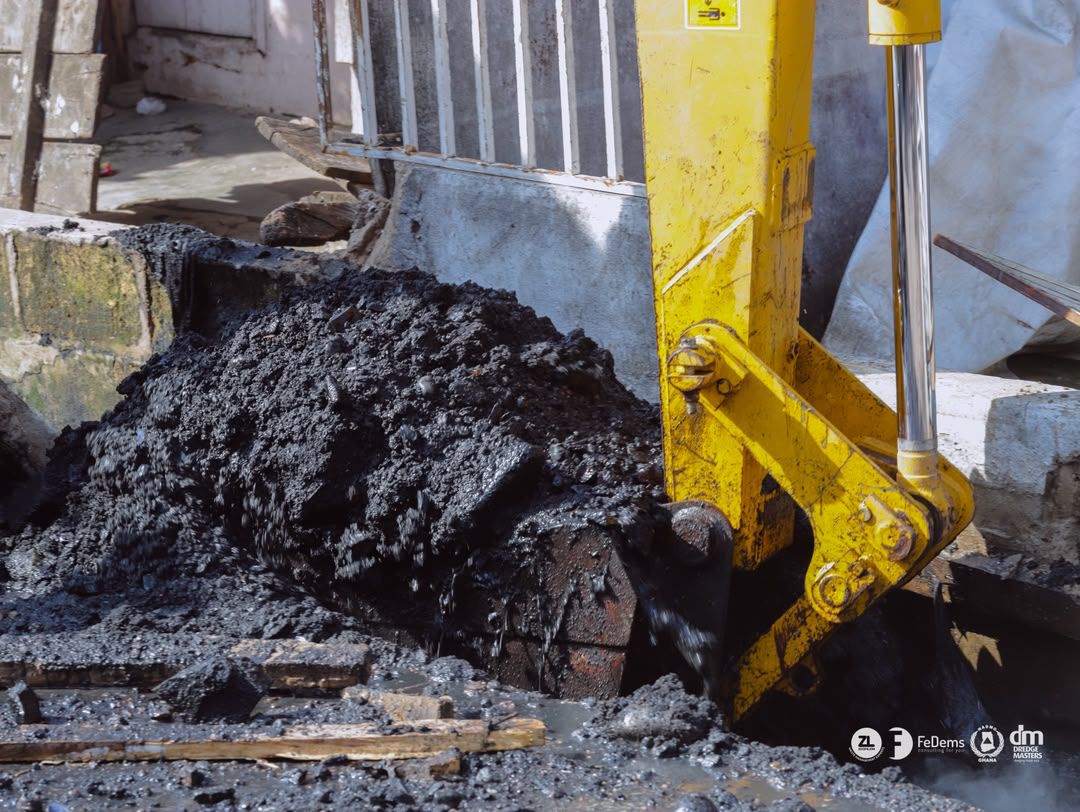
Heavy equipment operators and hundreds of sanitation personnel were deployed to flood-prone communities to remove silt, plastics and other debris obstructing the free flow of stormwater.

Speaking to journalists during the exercise, the Greater Accra Regional Manager of Zoomlion Ghana Limited, Ricky Anokye Frimpong, said the initiative commenced on Wednesday as a three-day emergency intervention targeting drains and gutters in areas identified as highly vulnerable to flooding. According to him, the exercise exceeded expectations from the very first day, with strong public enthusiasm and encouraging results.
He explained that the campaign focused primarily on desilting major drains that could not be cleared through manual labour alone. As a result, Dredge Masters deployed earth-moving machinery to tackle heavily clogged drainage systems, while FeDems and other technical teams supported operations in larger waterways. Areas covered included Mallam, Weija, Teshie-Nungua, Ayawaso West Wuogon, the vicinity of the National Service Secretariat, Dansoman Agege, Kaneshie, Lapaz, Mile 7 and the Ofankor Barrier enclave.

Mr. Frimpong noted that motorists using the GBC route and residents within the affected communities had witnessed firsthand the scale of work undertaken by the teams. He disclosed that desilting works along the Weija corridor, which had long posed challenges to both commuters and vehicular movement, had significantly improved the drainage situation in the area. He further praised market women and local residents who voluntarily joined the exercise, describing their participation as a demonstration of growing public awareness and shared responsibility.
He attributed the success of the operation largely to the collaborative approach adopted by the implementing institutions and expressed appreciation to the Executive Chairman of the Jospong Group of Companies, Dr. Joseph Siaw Agyepong, for personally financing the initiative. According to him, the intervention was undertaken without external funding. “He is funding it from the first day to the last. Everything that we are doing, he is the one funding it,” he stated, describing the gesture as a remarkable humanitarian contribution towards protecting lives and property.

Mr. Frimpong, however, stressed that engineering interventions alone would not permanently solve Accra’s flooding challenges if residents continued to dispose of refuse indiscriminately. He observed that many of the drainage channels originally constructed to carry stormwater had become choked with plastics, sand and household waste generated through human activities. He therefore urged residents to adopt proper waste management practices, utilise approved waste containers and subscribe to licensed waste collection services to prevent refuse from finding its way into drains.
Joining the field operations, the Municipal Chief Executive for Ablekuma West, Hon. George Kpakpo Allotey, said although sanitation remained a routine priority for the assembly, the scale and impact of the exercise had been significantly enhanced through the multi-agency collaboration. He explained that the combined technical expertise and heavy equipment provided by Zoomlion, NADMO and Dredge Masters enabled crews to remove deep-seated silt and debris from major waterways that would have been difficult to clear through manual efforts alone.

Hon. Kpakpo Allotey also issued a stern warning to developers and individuals who have illegally erected structures on waterways and drainage reservations. He stressed that the assembly would no longer tolerate activities that endanger public safety and obstruct the free flow of stormwater. According to him, authorities are prepared to demolish such structures where necessary, insisting that the protection of lives and critical infrastructure must take precedence over private interests. He further cautioned residents against dumping refuse into gutters, warning that offenders would face the full rigours of the law.
The campaign equally gathered momentum in the Ga North Municipality, where teams focused on clearing severe drainage bottlenecks around the Ofankor Barrier enclave. The Assemblyman for Ofankor South, Hon. Dennis Quarshie, described the intervention as both timely and necessary, noting that recent heavy rains had once again exposed the area’s vulnerability to flooding. He explained that Ofankor’s geographical position within a lower belt naturally channels runoff from surrounding elevated communities, making efficient drainage maintenance critical to protecting lives and livelihoods.

Addressing concerns about the sustainability of the intervention, Mr. Frimpong disclosed that Zoomlion had already assigned officers to all 29 MMDAs within Greater Accra to work closely with Environmental Health Departments and NADMO officials to monitor flood-prone areas and coordinate regular maintenance exercises. He expressed optimism that the assemblies, unit committees, traditional authorities and community stakeholders would embrace the initiative and institutionalise periodic desilting activities, particularly as meteorological forecasts indicate that heavier rains are yet to arrive.
As desilting and dredging operations continue to expand across the Greater Accra Region, stakeholders have described the campaign as a model of effective public-private partnership in disaster preparedness. They emphasised that while clearing drains remains essential in mitigating floods, lasting success will ultimately depend on sustained public education, responsible waste disposal practices and active citizen participation in safeguarding the capital against future flooding disasters.