Story by Bless Koku Alormasor
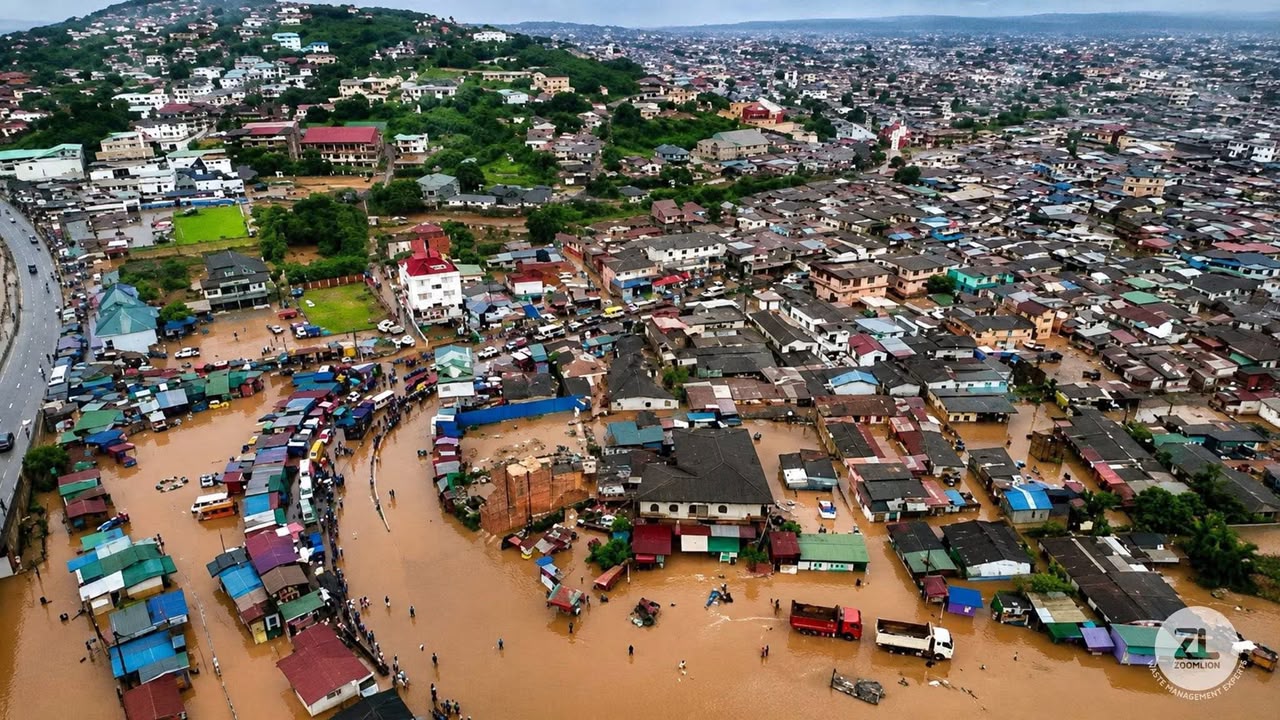
President John Dramani Mahama embarked on an aerial assessment of Accra’s flooding situation after yesterday’s torrential rains. Videos of the First Gentleman sitting in a chopper, spotting a dejected figure with a morose look, have since gone viral with varied opinions and commentaries on this action.
A tad earlier today, opposition leader Dr. Mahamudu Bawumia, who was Ghana’s Vice President between January 2017 and January 2025, also marshalled some of his party members and visited SCC on the N1 Highway to witness, at first hand, the flooding situation at Ataala, an area that has been at the mercy of floods for several years whenever there is a downpour.
Sadly, none of these inspire confidence , and I am apoplectic with rage!
Politicians have cracked a code for their modus operandi, and they take advantage of the gullibility of their followers to execute this code, which continues to work flawlessly: identify a problem, pretend to empathise with the victims, dole out a few relief items, take videos and photos, promise to deal with the issue, and then go to slumber. This script has been used continuously by Ghana’s NDC and NPP over the last few decades with infallible exactitude, and the results have been near perfect.

When disaster struck on June 3, 2015, President Mahama was in the third year of his first term. Human beings were reduced to bone and ash, with their charred cadavers floating on floodwaters. Businesses built through many years of blood and sweat were reduced to rubble. The refrain from all and sundry was, “Never Again!” The President delivered an inspiring piece of oratory during the National Memorial Service held on June 11, 2015, to commemorate the passing of the 152 persons whose lives were cut short in that disaster. Here’s an excerpt from the President’s speech:
“My Brothers and Sisters, …the conversation should not be centred on what past governments did not do but, rather, on what this government must and will do. We should not waste the valuable resource of time predicting when another flood or disaster will claim lives; we should, rather, invest that time in taking the appropriate measures to prevent the possibility of such an occurrence.”
A few questions linger in my mind: after the catastrophic event of June 3, 2015, President Mahama was in office for 19 more months before the NPP took over power in January 2017. Were 19 months enough time to resolve Ghana’s flooding situation? What strides were made? What did the successive government add to the efforts made to curb Accra’s perennial floods?
During former President Akufo-Addo’s first term, he made a solemn pledge to make Accra the cleanest city in Africa. In May 2019, the Ghanaian government told its citizens that the Odaw River and Korle Lagoon would undergo transformation to become tourist attractions, complemented by hotels, recreational centres, and cruise boats upon completion. When this happened some seven years ago, just like President Akufo-Addo, I listened attentively, though with some pessimism, over the reality of such a promise. Odaw River and Korle Lagoon to be transformed into recreational centres? You can say that to the marines!

For eight years, Dr. Bawumia, who will be leading the NPP into the next general elections, was Ghana’s Vice President. As Veep, he wielded a considerable amount of power. What did he, in his capacity as Vice President, add to the mitigation of flooding in the capital? While in opposition, it is easy to assemble your members at some of these flood zones to seemingly condole with the victims, but the bigger question is: “What did you do when you had power?” Dr. Bawumia cannot pretend as though he had no idea of the terrible state of the N1 Highway at Ataala. He plied that route to Cape Coast repeatedly while he was Veep for eight years. Or did he not realise because the V8 in which he sat failed to notify him of the poor state of that stretch as a result of persistent flooding and erosion? Such vote-catching rhetoric has lived too long to be desired.
I will be the first to admit that human activities have contributed tremendously to our flooding situation. Our city is an eyesore, thanks to very irresponsible waste management, the erection of illegal structures, et al. It is not a rare sight to spot huge piles of refuse at bus stops, markets, and even on the shoulders of major roads. The price we have had to pay for these irresponsible behaviours is the perennial deluge that continues to consume our homes and businesses.
I am, however, firmly convinced that the President has the power to permanently change the current situation.
The buck stops with the President.
The lack of law enforcement continues to be our bane. The President has all the power to ensure that laws protecting our environment are enforced. Oftentimes, authorities have, for fear of being voted out of power, pandered to the whims of citizens who break the law. They fall for the emotional appeal fallacy of a few people and watch on while a greater number suffer the consequences of their misdeeds. It is high time the President belled the cat and held his appointees accountable for failing to deliver on their mandate. Law enforcement agencies that shirk their responsibilities must face the music. We can no longer continue on this tangent.

The President, in a social media post yesterday in the wake of the floods, mentioned that the government is “accused of being inhumane when it begins removing structures in waterways”. Government cannot continue to feign this “humanness” excuse. It is wrong to accommodate the convenience of a few people while putting the lives and property of the greater lot in jeopardy.
Dear President Mahama, your oratory prowess is spoken of highly, but that will not fix the flooding situation. Stringent measures are required. Action is required if Ghana’s capital is to return to its glory days: the days when illegal structures were not erected on waterways, the days when people were overcome with trepidation at the mention of the “Town Council”, the days when heaps of rubbish did not sit in markets, the days when floodwaters did not rob people of sleep because Ghanaians went to bed peacefully, dreamt, and woke up to their homes intact—just the way they were the night before.
Ghanaians have heard more than enough speeches!
Acta non verba!