
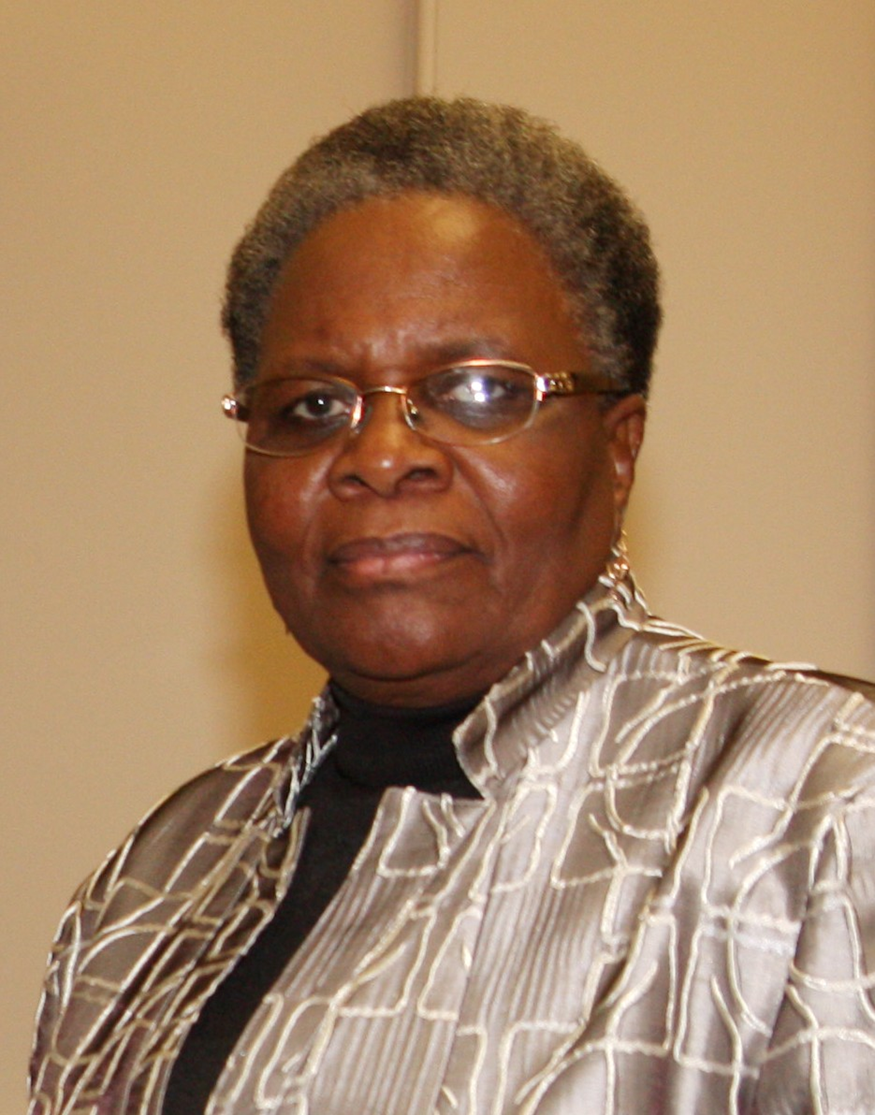
Victoria Wilson
Photo: Foreign and Commonwealth Office (CC BY 2.0)
Namibian President Netumbo Nandi-Ndaitwah has arrived in China for a state visit focused on deepening cooperation in critical minerals processing, green hydrogen, and manufacturing investment, the two governments said.
The visit, which began July 5, runs through July 11 and is Nandi-Ndaitwah’s first trip to China since she was inaugurated in March 2025. It follows a ministerial meeting in Beijing in April at which both sides agreed to advance cooperation across energy, minerals, agriculture, infrastructure, and technology.
Nandi-Ndaitwah is scheduled to hold formal talks with President Xi Jinping, who will host a welcome ceremony and state banquet in her honour in Beijing later this week. She will also meet separately with Premier Li Qiang and Zhao Leji, chairman of the Standing Committee of the National People’s Congress.

Photo: Dati Bendo / EC (CC BY 4.0)
Her first official meeting, on Monday in Guangzhou, has been with Guangdong party secretary Huang Kunming, a member of China’s 24-member Politburo. Nandi-Ndaitwah has chosen Guangzhou, the manufacturing capital of Guangdong province and one of China’s largest industrial cities, as her first stop, saying she selected it because of “its significant economic profile.” The itinerary includes Shenzhen on July 7, where visits to the CGN Daya Bay Nuclear Power Plant, Huawei, and municipal authorities are scheduled, followed by Chengdu on July 8 for agriculture and agro-processing engagements, before the delegation moves to Beijing for the presidential summit.
The confirmed agenda includes critical minerals and mineral processing, green hydrogen, manufacturing, agriculture, renewable energy, infrastructure, education, digital innovation, public health, and tourism. Both governments have described the visit as an opportunity to advance the outcomes of the September 2024 Forum on China-Africa Cooperation (FOCAC) summit.
Minerals and Beneficiation
The Namibian government’s stated priority is attracting investment in minerals processing and downstream manufacturing.
In 2023, Namibia banned the export of unprocessed critical minerals including lithium, cobalt, manganese, graphite, and rare earth elements. The government’s Mineral Beneficiation Strategy sets a target of processing 57 percent of mineral exports locally by 2030, creating between 15,000 and 20,000 industrial jobs in downstream sectors. A proposed Minerals Bill, still under development, would require 51 percent Namibian ownership in all new mining ventures.

Photo: Ikiwaner / Wikimedia Commons (GNU FDL 1.2)
Namibia holds deposits of uranium, lithium, cobalt, copper, zinc, rare earth elements, and diamonds. The Rössing uranium mine, operating since 1976, is one of the world’s longest-running open-pit uranium mines and makes Namibia one of the leading global producers of uranium oxide.
The Lofdal Heavy Rare Earths project in northwestern Namibia is completing its definitive feasibility study after a pre-feasibility study in December 2025 projected production of approximately 1,500 tonnes of rare earth oxide per year. Rare earth elements including dysprosium and terbium are used in electric vehicle motors, wind turbine magnets, and defense systems.
Green Hydrogen
The Hyphen Hydrogen Energy project, a planned USD 9.4 billion investment to produce green hydrogen and green ammonia from Namibia’s solar and wind resources, is a central item on the visit agenda.
China National Chemical Engineering’s subsidiary has secured engineering, procurement, and construction contracts for the project’s production facility. Envision Energy, a Chinese renewable energy company, is partnered in a separate Namibian hydrogen venture at Walvis Bay.

Photo: Hp.Baumeler / Wikimedia Commons (CC BY-SA 4.0)
The first phase of the Hyphen project targets 2GW of installed capacity at an estimated cost of USD 4.4 billion, with an annual production target of 300,000 tonnes of green hydrogen.
Zivayi Chiguvare, acting director of the Namibia Green Hydrogen Research Institute, said Namibia’s hydrogen strategy can be aligned with China’s 15th Five-Year Plan (2026–2030), which prioritises green development and renewable energy, opening opportunities in technology transfer, financing, and skills development.
Bilateral Relations

Photo: Ana Nascimento / Agência Brasil (CC BY 3.0 BR)
Namibia and China established diplomatic relations on March 22, 1990, one day after Namibia’s independence. China had provided political and material support to the South West Africa People’s Organization (SWAPO) during the independence struggle. The relationship was elevated to a Comprehensive Strategic Cooperative Partnership in 2018.
“Without China, there would be no such development achievements in Africa today,” Namibia’s Foreign Minister Selma Ashipala-Musavyi said at the April 2026 ministerial meeting in Beijing.
“The traditional friendship between the two countries has withstood the test of global changes,” Chinese Foreign Minister Wang Yi said at the same meeting.
Trade
China-Africa trade reached USD 92.3 billion in the first quarter of 2026, a 27.1 percent increase year-on-year, according to Ecofin Agency. Chinese exports to Africa grew 32.1 percent over the period; African exports into China grew 18.4 percent.
From May 1, 2026, China has extended zero-tariff access to all 53 African countries with which it maintains diplomatic relations, covering finished and semi-processed goods as well as raw commodities.
The African Growth and Opportunity Act (AGOA), which provided preferential US market access to sub-Saharan African exporters since 2000, lapsed on September 30, 2025 after Congress missed the renewal deadline. It was subsequently reauthorized for one year only, through December 2026, retroactive to the expiry date. The future of the programme beyond that date remains under discussion in Congress.
The state visit concludes July 11, at which point the outcomes of the meetings and any signed agreements will be known.